
Experimental Firing of Pottery under a Reducing Atmosphere within the ARTIFACTA Project
Blog by Esther Trave
What can we learn from firing ceramics the prehistoric way? Within the ARTIFACTA project, a recent experiment conducted at the Santa Margarida archaeological site (Barcelona, Spain) explored the controlled firing of hand-made pottery under reducing conditions using local materials and semi-subterranean structures. With the involvement of university students and the support of laboratory analyses, this project seeks to bridge experimental archaeology with field interpretation, offering new insights into ancient ceramic technologies.
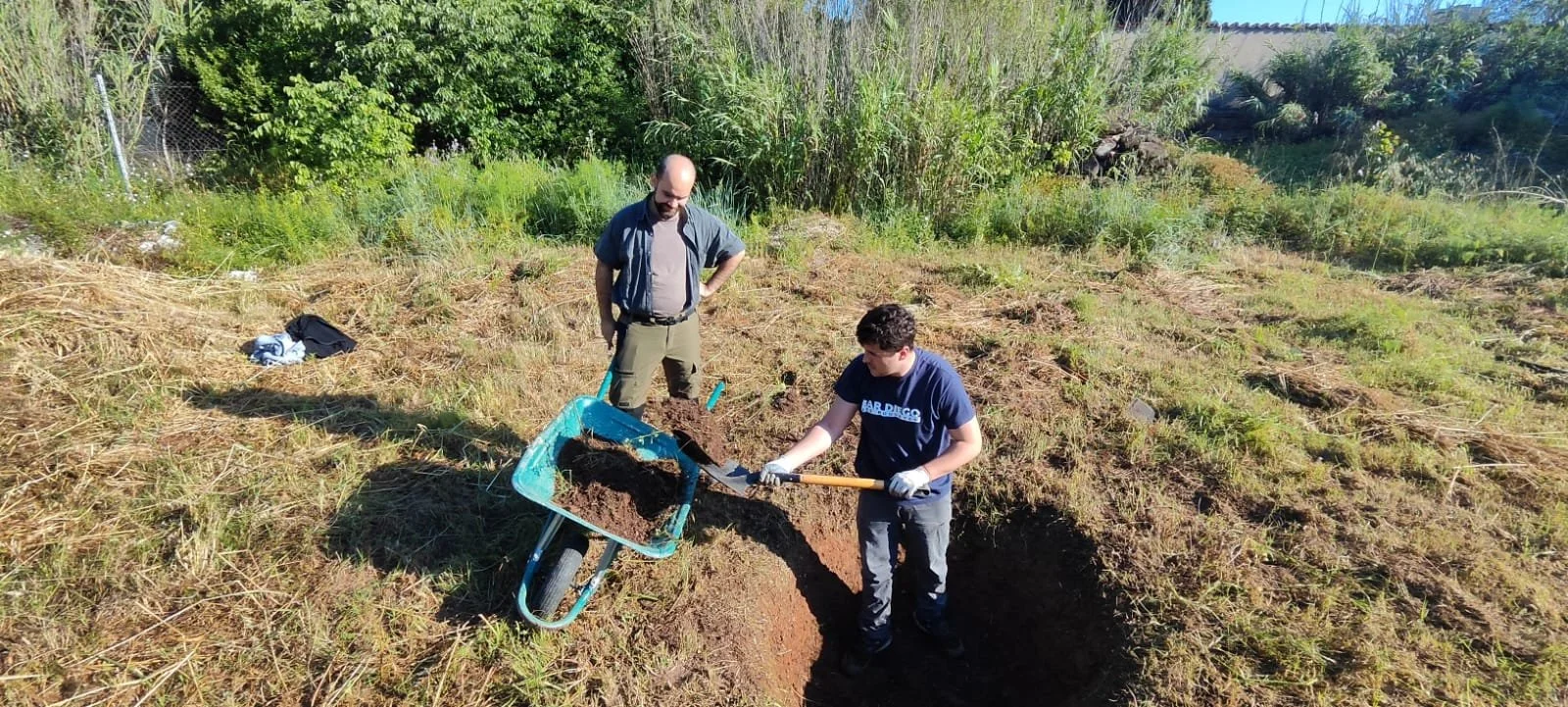
As part of the ARTIFACTA project, funded by the Spanish Ministry of Science, Innovation and Universities, we carried out an experimental reductive firing of ceramics. The main goals of the experiment were to monitor the firing process under reducing conditions, as well as the preparation of the ceramic vessels, in order to compare the outcomes with existing archaeological materials. The preparation of the ceramic pieces began in January 2025 at the University of Barcelona, with the collaboration of undergraduate students from the History and Archaeology degree programmes. We worked with two ready-made ceramic pastes of known chemical composition: one without temper, and another with an added 25% of quartz temper. The first paste was also used to create additional mixtures by adding varying proportions of crushed local rocks (phyllite) collected near the firing site. The firing took place at the archaeological site of Santa Margarida (Martorell, Barcelona, Spain) between May 16th and 18th, 2025, and lasted 48 hours. It was conducted in a semi-subterranean structure covered temporarily for the occasion. The experiment began on Friday, May 16th at 8:00 AM with the cleaning and preparation of a pit previously used for experimental firings. This pit functioned as an intermediate stage between a permanent kiln structure and an open bonfire.
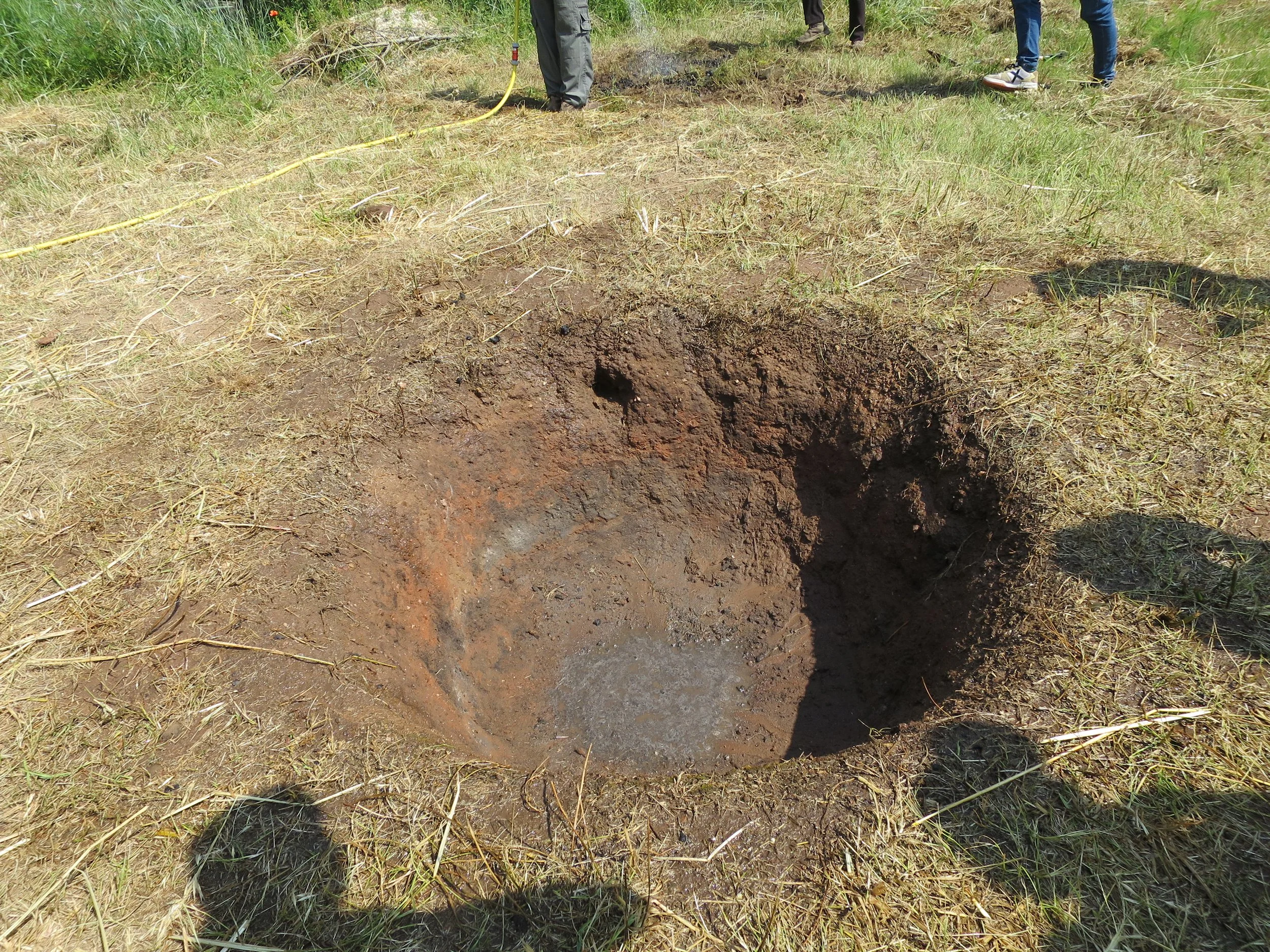
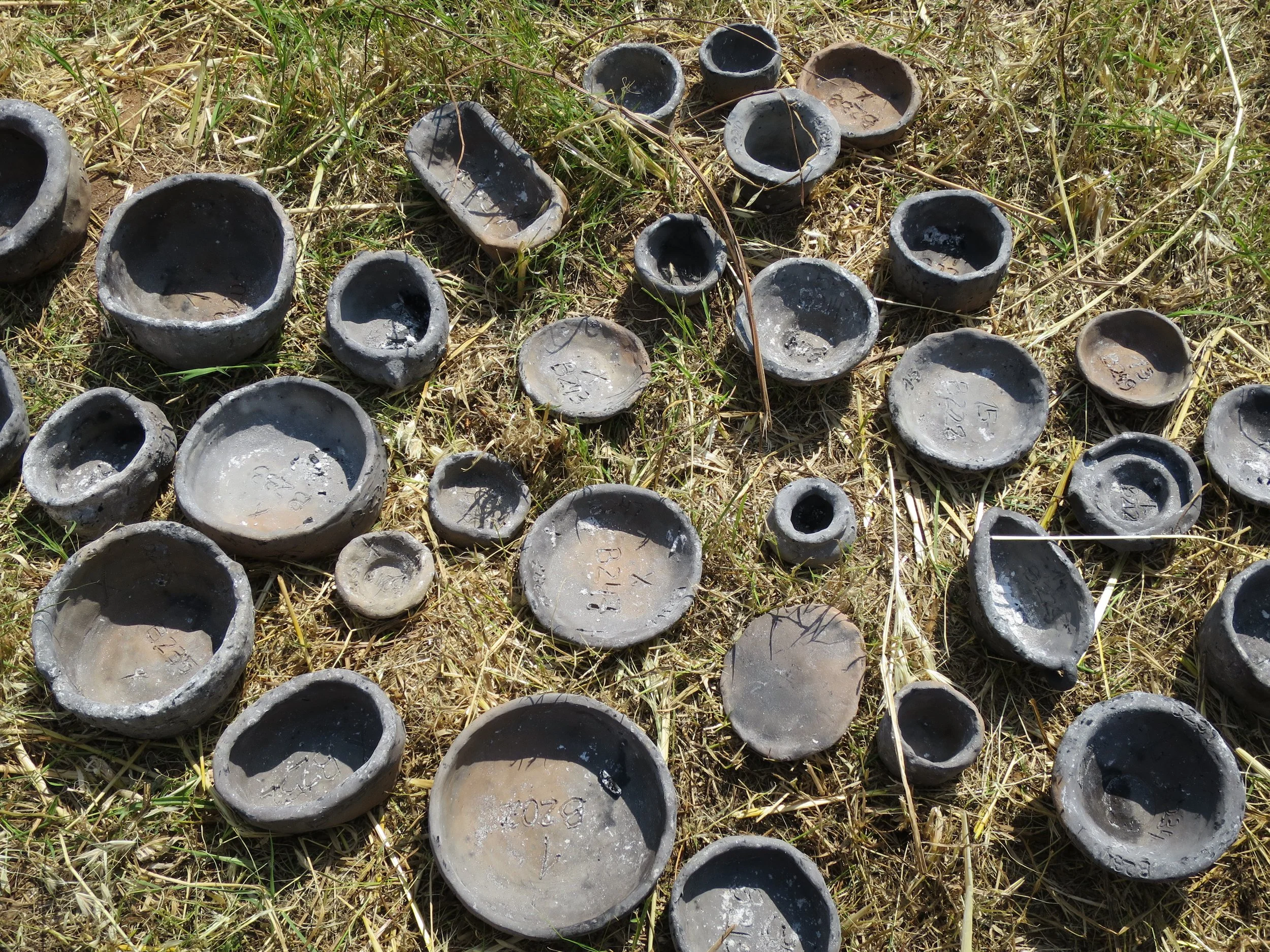
Following this, we lit the fire and arranged the ceramic vessels inside. Each piece was assigned a number, allowing us to record its exact location within the structure. This documentation is key for interpreting the firing results and analysing the effects of atmospheric irregularities and heat distribution on each item.
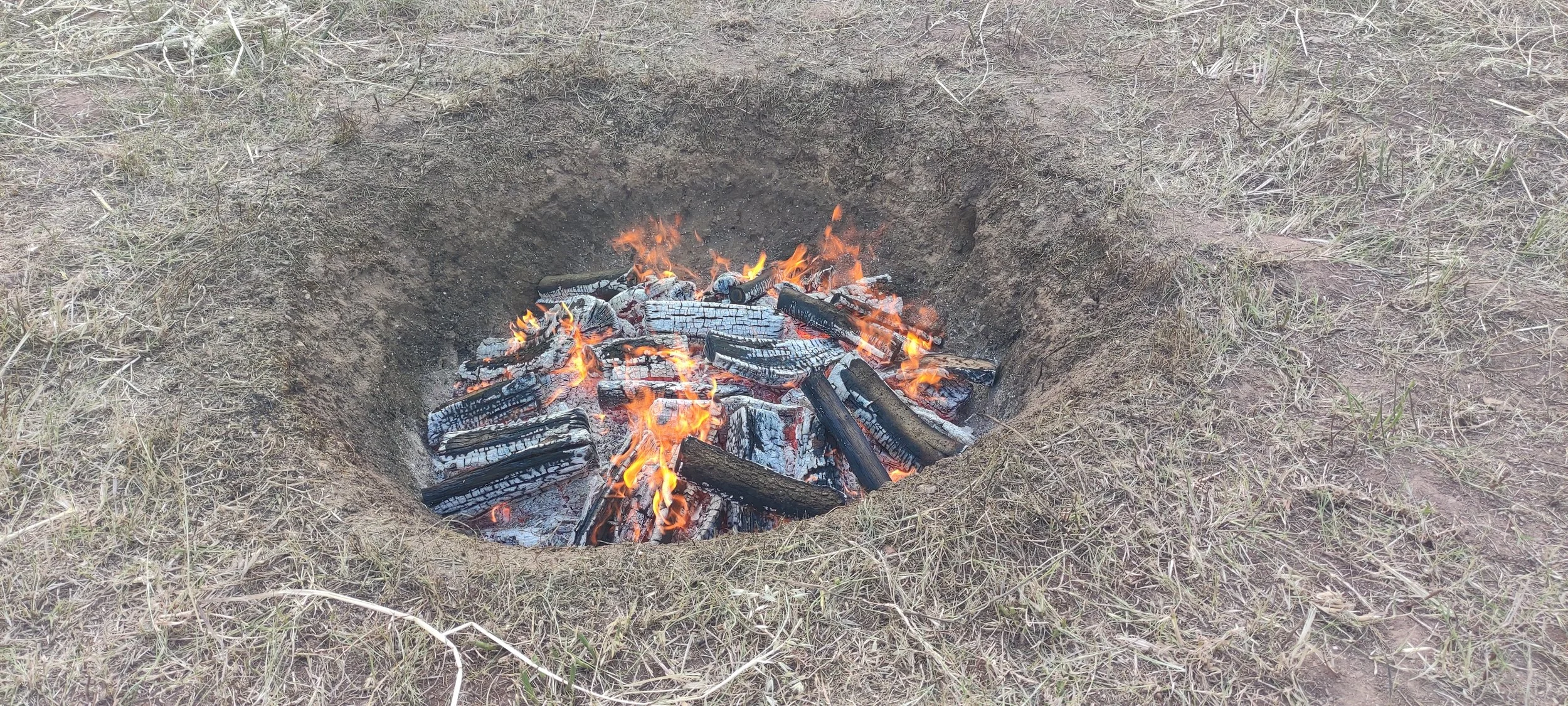
By 10:00 AM, we began increasing the temperature using approximately 700 kg of oak firewood, reaching a peak temperature of 950˚C by 3:00 PM. From that point, we maintained the temperature until 7:00 PM, when we began sealing the structure with a temporary cover. Throughout the day, we took temperature readings every 10 minutes at various points in the structure.
Once a final load of firewood was added and the flames began to diminish, we covered the firing chamber with sod blocks (grass-covered earth slabs) to create a temporary dome. This allowed combustion to continue until oxygen within the chamber was depleted, initiating the reduction process. We then gradually added earth to fully insulate the chamber, carefully observing and sealing any points where smoke was escaping. By 8:30 PM, the structure was completely covered, and we began continuous monitoring, recording temperatures every 30 minutes, and then every two hours from 3:00 AM onwards, on Saturday.
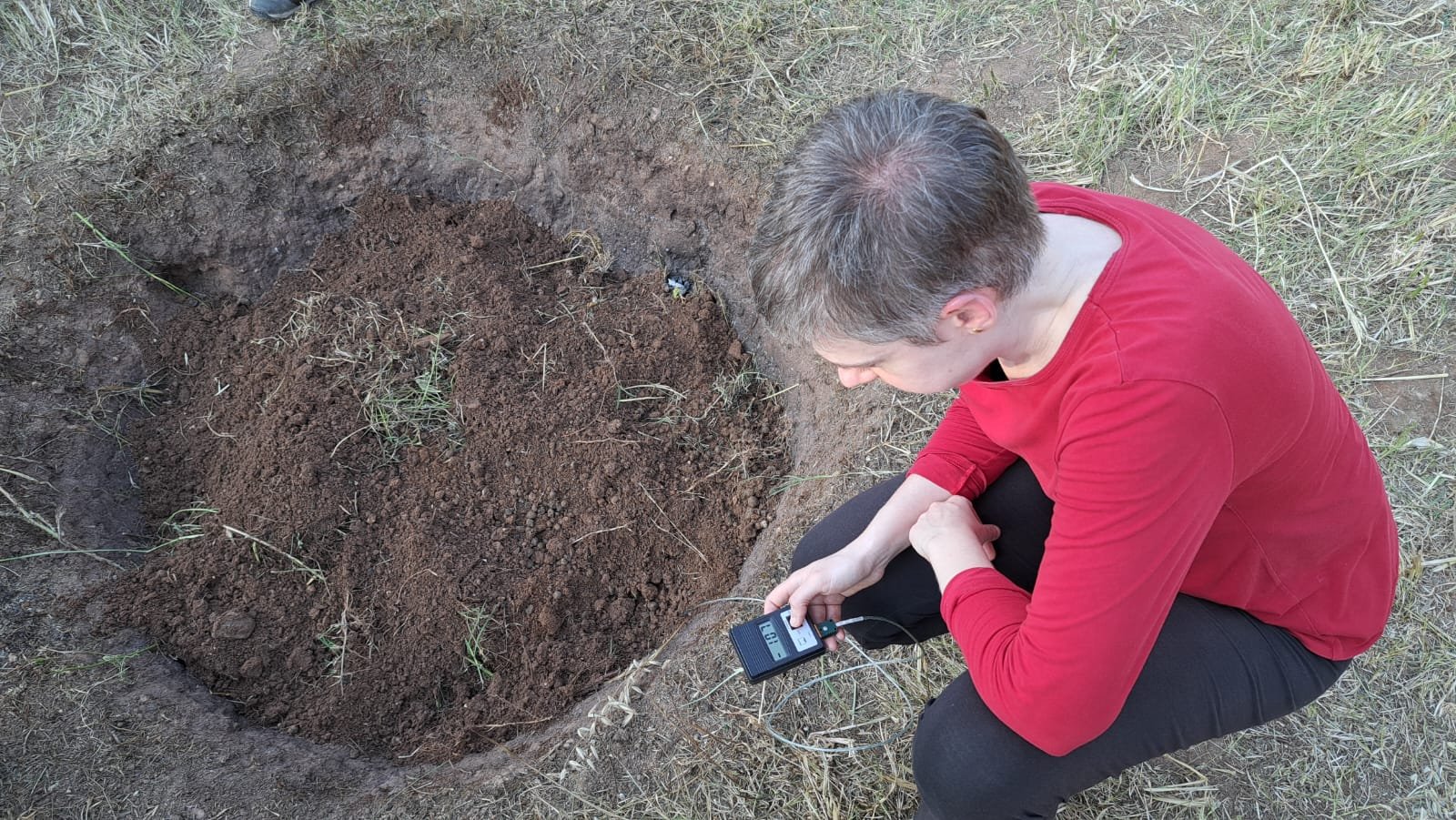
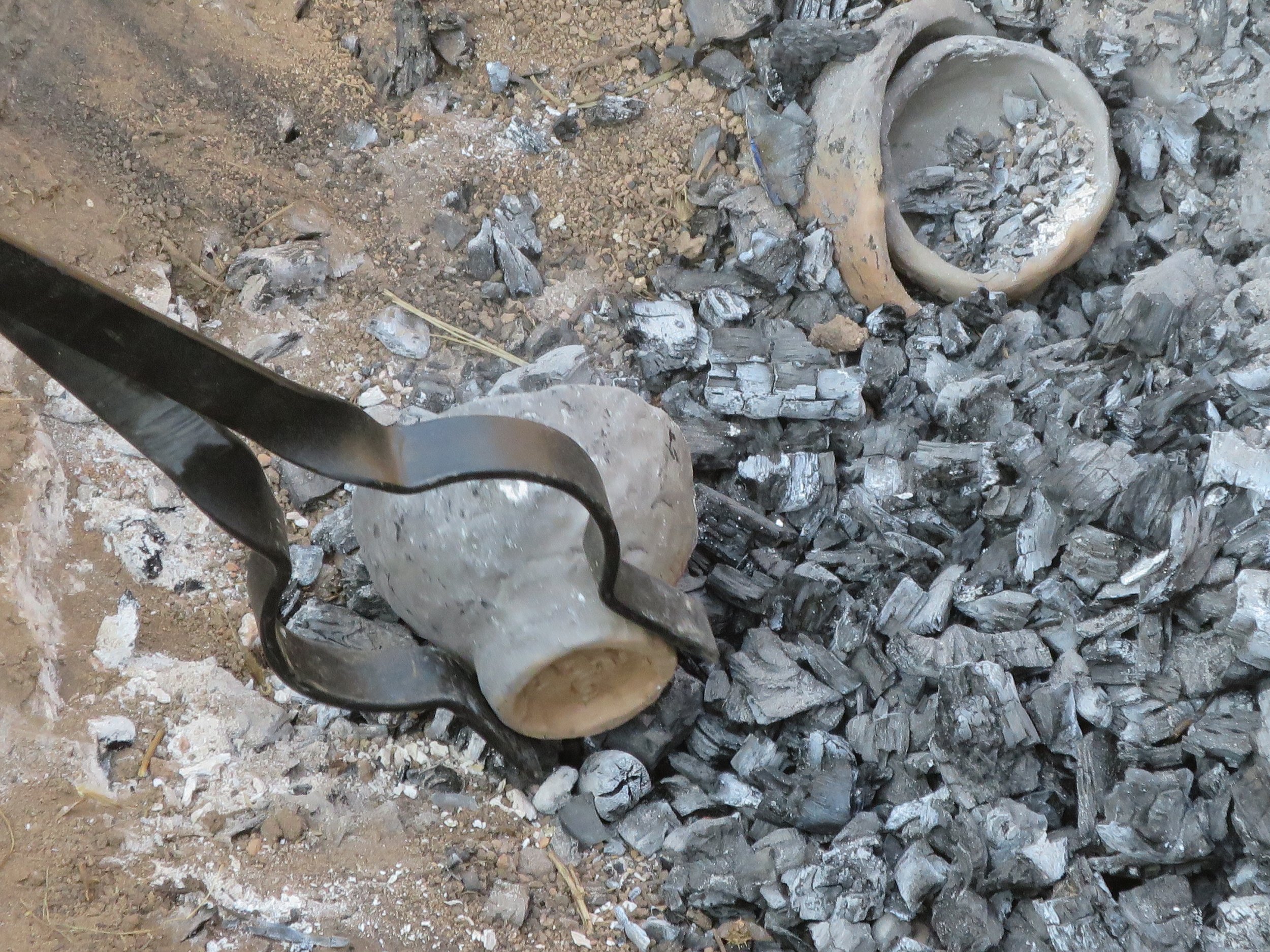
Throughout Saturday, the temporary covering hardened into a protective dome over the remaining embers. After 24 hours, on Saturday evening, we noticed a small opening in the cover that revealed glowing embers and threatened the structural integrity. We promptly sealed the gap with an additional sod block and some earth, stabilising the structure and allowing the cooling process to continue. On Sunday morning at 8:00 AM, we began uncovering and excavating the chamber to retrieve the ceramic vessels. The drop in night-time temperature helped cool the interior. We first removed the hardened outer layer of earth, revealing the charred logs from the final wood load. Beneath them there was a thick layer of fragmented charcoal, still at approximately 150˚C. The removal of this layer exposed a second one of white and greyish embers, hotter at around 300˚C. Despite the heat, we were able to retrieve all the ceramic pieces intact, well-fired, and with a fairly uniform grey colouration.
The research now continues in the laboratory, where the pieces will be documented and studied through macroscopic observation and thin-section preparation for microscopic analysis. Our aim is to understand how the firing temperature and atmospheric conditions (within a controlled experimental setting) affect the internal colour of the ceramic matrix and alter the nature and mineralogical properties of the inclusions.
Ultimately, we hope this research will provide valuable insights that can inform field archaeologists during their initial assessments of ceramic materials. The investigation is ongoing, and we look forward to sharing more results with you soon.
Blog by Esther Trave