Stiftung Stadtmuseum Berlin (Dueppel Forderverein)
Germany
Focus areas: Time period, time period
Topics of Interest: Topic, Topic
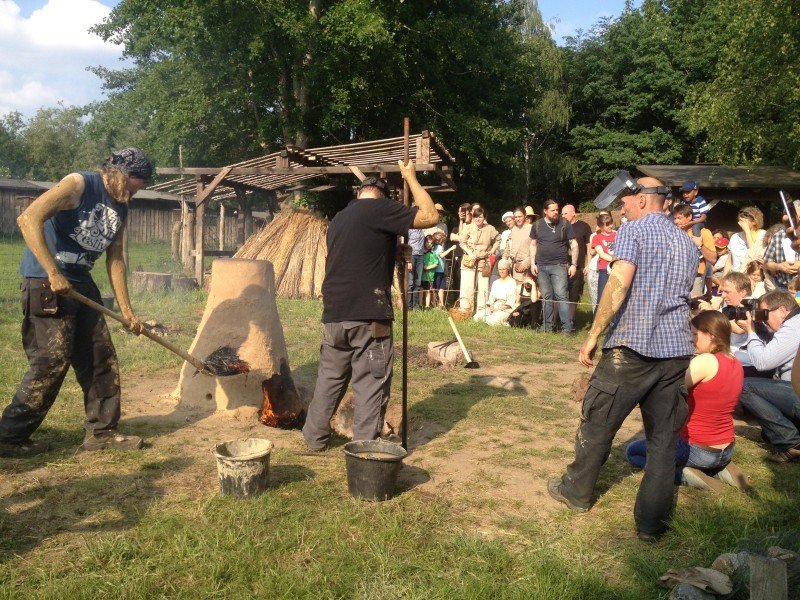
The association's various working groups focus on medieval crafts, the production of historical textiles, the maintenance of the reconstructed houses, and medieval agriculture. In this way, the members bring the museum village to life.
The discovery of the medieval settlement at Machnower Krummen Fenn, known as the "Düppel Museum Village," dates back to medieval pottery shards found by Horst Trzeciak in the spring of 1939. These shards suggested that a settlement had existed here in the 12th/13th century.
Excavations, led by Prof. Dr. Adriaan von Müller, did not begin until 1967. These excavations unearthed traces of a horseshoe-shaped village, including house foundations, wells, palisades, fences, and everyday objects. The settlement existed from approximately 1170 to 1220, after which it was abandoned. Unfortunately, no written records of this period exist. A total of eight hectares of settlement area were investigated between 1965 and 1990.
During the excavations, a group of archaeologists, including the then State Archaeologist of Berlin, Prof. Dr. [Name missing in original text], developed a close-knit community . Adriaan von Müller and Wolfgang Gehrke had the idea of creating an archaeological experimental field and conveying the results about life in the Middle Ages to visitors in a living museum.
This idea was met with great enthusiasm and led to the founding of the "Förderverein Museumsdorf Düppel e. V." (Association for the Promotion of the Düppel Museum Village) in May 1975. From 1975 to 2008, numerous archaeological features such as houses, palisades, wells, ovens, and fences were reconstructed.
The idea could never have been realized without the help of colleagues from the Biskupin Open-Air Museum in Poland and the generous donations of Berlin citizens. The support of the Americans, British, and the Berlin police, who delivered oak trees felled during the expansion of Tegel Airport—trees that were no longer economically viable due to bomb and shrapnel damage—free of charge, was also indispensable. Despite all this assistance, the work performed by the members in the 39 years since the association's founding—true to Professor Müller's motto, "for free"—amounts to several million euros.
To create a living museum, working groups were formed to explore various activities of people in the Middle Ages. Over time, these groups developed extensive knowledge of medieval techniques, such as house construction, wool and linen processing, agriculture, animal husbandry, woodworking and metalworking, pottery, cooking, and tar production. Many of these findings have been published. The Düppel Museum Village has become a center for experimental archaeology in Germany. The Düppel Museum Village
Support Association received institutional and personnel funding until 1995, by decision of the Berlin House of Representatives. Since 1995, the Düppel Museum Village has been an integral part of the Berlin City Museum. The director of the Berlin City Museum, Paul Spies, incorporated his vision for the future of the site into his master plan of July 2016.
Even during the founding phase, working groups on various topics formed among the association members. These working groups, in more or less modified form, continue to exist today and still enliven the village with their craft demonstrations and expertise.
To realize one of the museum village's main goals—the reconstruction of a medieval village within its cultural landscape—working groups on agricultural topics were also established. Thus, visitors can explore not only medieval houses but also the associated gardens, fields, pastures, and woodlands. The care of the farm animals is ensured by the staff of the Berlin City Museum.