
ArcheoHotspots: A Dutch Phenomenon Shaping the Future of Public Participatory Archaeology
Blog by Alexander van de Bunt

It began on 10 December 2014 at the Allard Pierson Museum in Amsterdam, when Wim Hupperetz and his team introduced the ArcheoLab. More than an exhibition space, it invited visitors to move beyond passive observation and actively participate in archaeological work. Members of the public could examine finds, contribute to research, and work directly alongside archaeologists and volunteers.

Few expected that this experiment would develop into a nationwide network and movement. Yet the principles behind it, openness, participation, dialogue, and shared stewardship of heritage, resonated strongly within both professional archaeology and the wider public. What began as a museum-based initiative gradually evolved into a distributed model of participatory archaeology.
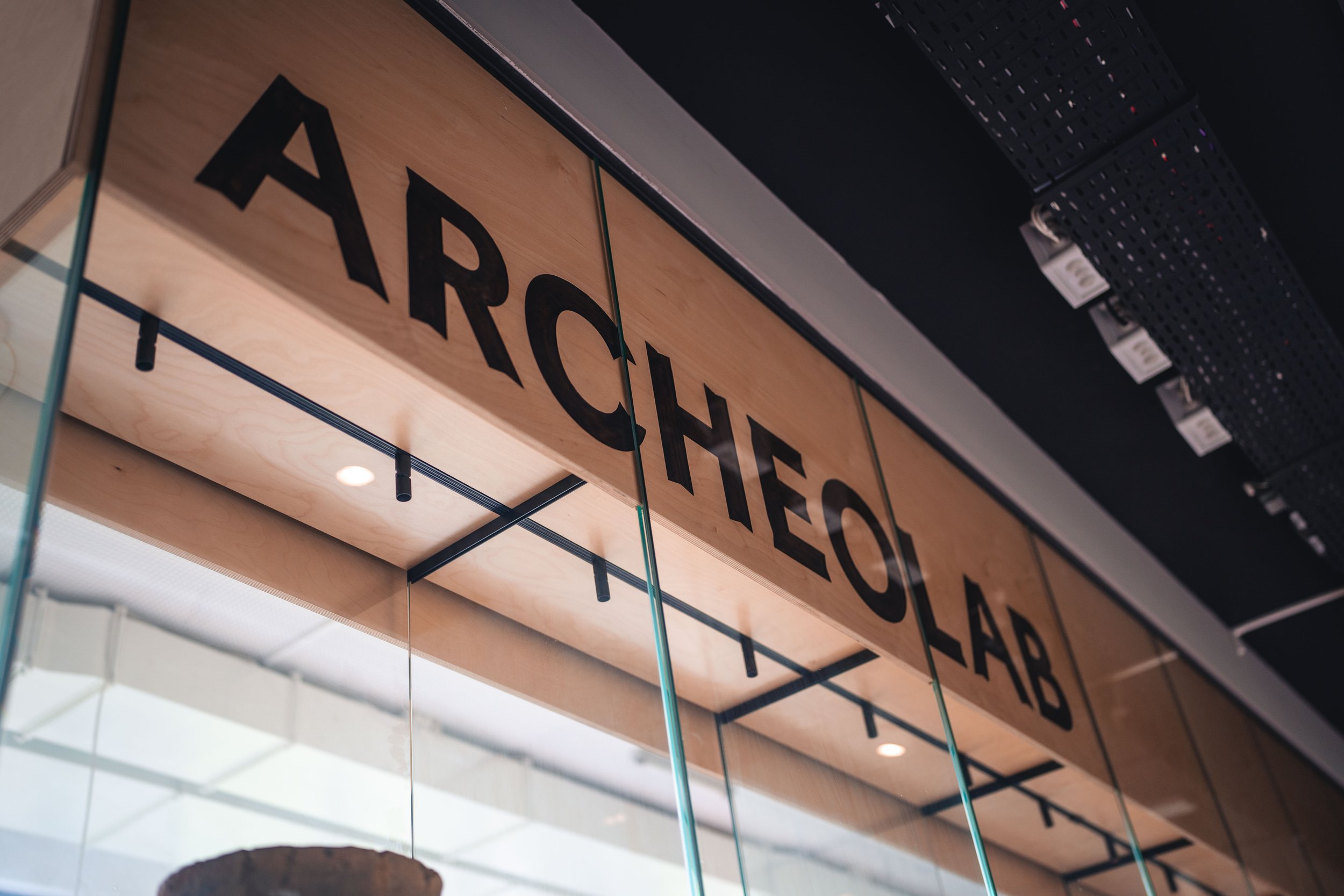
At the time, I was working as a public archaeologist at Landschap Erfgoed Utrecht, the provincial heritage organisation of Utrecht. When I first encountered plans for multiple ArcheoHotspots across the Netherlands, I immediately wanted to be involved. In 2016, together with the Utrecht University Museum and the Utrecht branch of the AWN, the Dutch Archaeological Society for Volunteers, I helped establish the fourth ArcheoHotspot. Since 2022, I have served as national coordinator of the network, which has since grown to more than thirty locations, including permanent labs, mobile setups, and pop-up formats.
Before discussing its wider implications, it is necessary to ask a simple question: what is an ArcheoHotspot?
What is an ArcheoHotspot?
An ArcheoHotspot is a public workspace where anyone can participate in archaeological activities or projects free of charge and without appointment. Visitors can take part in sorting, cleaning, and identifying archaeological finds, but equally important are the conversations that develop around this work, about material culture, local history, and heritage interpretation. It is not an educational demonstration, but a shared process in which participants become part of something larger than themselves.


While finds processing remains central, the concept has expanded. Many ArcheoHotspots now include experimental archaeology, reconstruction work, contemporary archaeology, artistic practice, and creative engagement with material culture. Archaeology is not only presented but actively practiced.
Most ArcheoHotspots are embedded within museums, libraries, heritage centres, or community organisations, though each develops its own focus according to local needs and opportunities. No two locations are the same. This flexibility is a defining strength of the model.
More importantly, ArcheoHotspots function as social spaces where archaeology becomes a shared practice rather than a specialist activity. Volunteers, visitors, students, archaeologists, older adults, newcomers, and participants in reintegration programmes work side by side. What emerges is not only public engagement with archaeology, but the formation of communities through archaeological practice.

Beyond the Museum Model
In most European contexts, engagement with archaeology remains largely observational. Objects are displayed in museum cases, carefully curated and interpreted by professionals. Direct access to archaeological material is limited and typically reserved for trained specialists.
This separation between expert and public is deeply embedded in institutional practice, professional training, and conservation frameworks.

The ArcheoHotspots model deliberately challenges this division. Archaeological material is not only displayed but handled, discussed, and reinterpreted collaboratively by professionals and non-professionals. Expertise remains essential, but it no longer functions as a barrier to participation. Instead, interpretation becomes a shared process.
I vividly remember a visit from a group of German archaeology students to the ArcheoLab in Utrecht. During a session on seventeenth-century pottery, we invited them to participate directly. Their first question was whether they were actually allowed to touch the material. The assumption that handling artefacts was prohibited revealed how strongly this boundary is embedded in many archaeological traditions.
Another moment came during a session with Syrian participants. While sorting Roman pottery, one participant picked up a fragment and noted that similar vessels were still used in his region to churn milk. He then provided a detailed explanation of the form and function based on lived experience. What began as a routine sorting exercise became a direct encounter between archaeological interpretation and intersected with lived cultural knowledge.
These moments demonstrate a simple point: when access changes, interpretation changes with it.
The Step Forward
The ArcheoHotspots are still evolving. One of the most promising directions lies in experimental and reconstructive archaeology, particularly where material evidence alone is insufficient to answer research questions.
How was an Iron Age skin boat constructed? How did it perform at sea? These questions cannot be resolved through analysis alone. They require making, testing, revising, and sometimes failing. They also require collaboration between researchers, craftspeople, experimental archaeologists, and the public.

It is precisely in this space, between evidence and practice, that ArcheoHotspots can further develop. Archaeology becomes not only interpretative but materially exploratory. This aligns closely with the Faro Convention, which frames heritage as something to be lived, shaped, and shared rather than only preserved or communicated.
Although rooted in the Dutch heritage landscape, the model is not geographically fixed. Comparable institutional and community structures already exist in regions such as Flanders, while other contexts may generate entirely different forms of participatory archaeology shaped by local histories and needs. The model is therefore best understood not as a national exception, but as an adaptable practice.
In that sense, ArcheoHotspots demonstrate what archaeology can become when it is no longer defined solely by institutional boundaries or expert authority, but shaped through shared practice in the present.
About the Author

Alexander van de Bunt is a Dutch archaeologist, writer, and photographer, with a strong focus on public archaeology. Since 2022, he has served as the national coordinator of the ArcheoHotspots.
In 2023, he produced a reconstruction of the Tiel bronze age sun calendar, which gained international attention and was widely shared. He is the author of Wee de overwonnenen. Germanen, Kelten en Romeinen in de Lage Landen (2020) and Wereldreizigers. De ontdekking van Europa (2026). His debut publication was shortlisted for the Homerus Prize in 2021.
All the photos are from the author.
Alexander van de Bunt Instagram
Blog by Alexander van de Bunt