
Between Archaeology and Craft: Reconstructing Stoneworking Practices Through Traditional Materials and Techniques: Some Examples from Norway
Blog by Filippo Olari
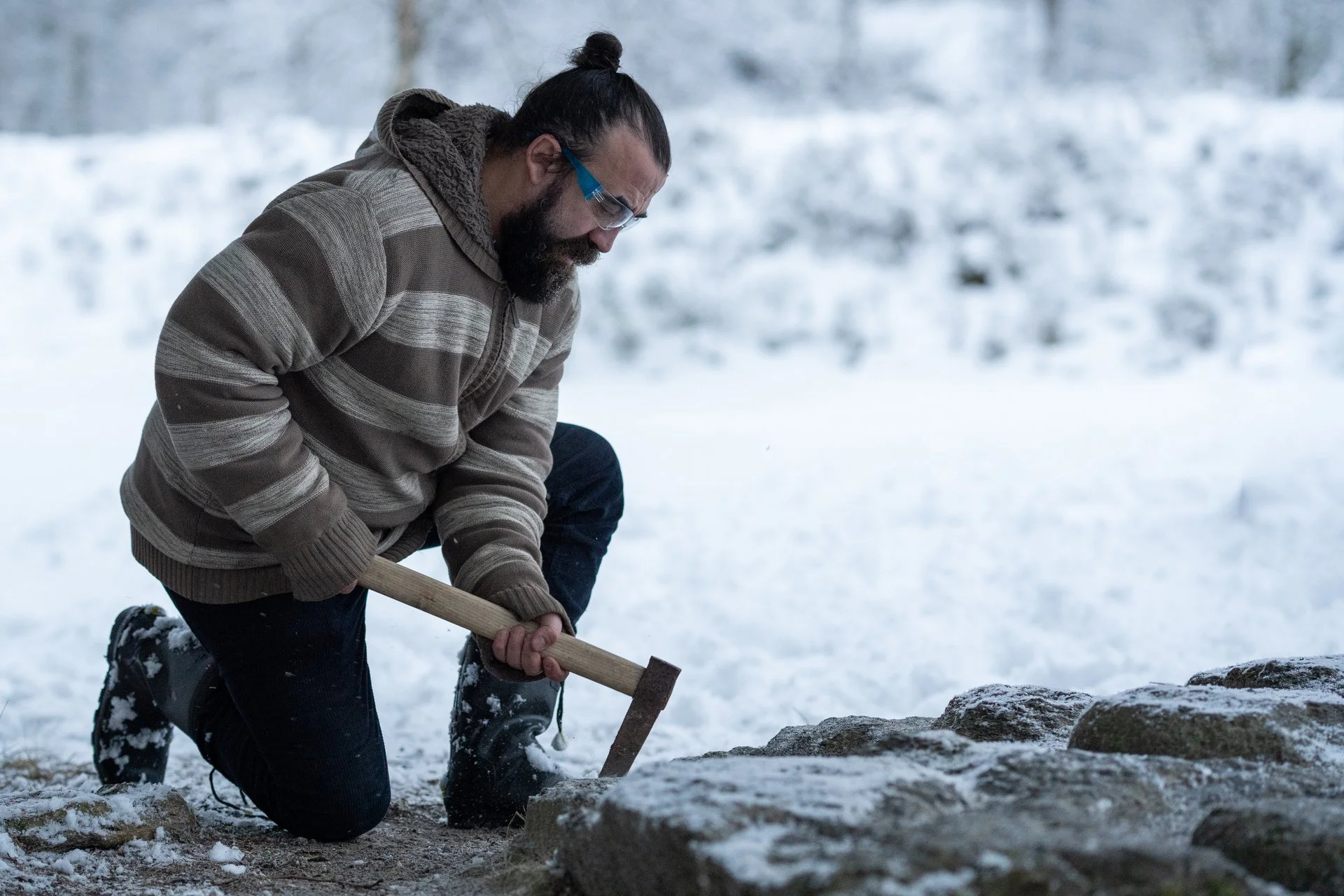
Over the past years, my work has developed at the intersection of archaeology and craftsmanship. As both an archaeologist and a stoneworker, I approach experimental archaeology not only as a research method, but also as a practical discipline grounded in manual skills, material knowledge, and long-term engagement with historical techniques.
Working at Kvernsteinsparken in Hyllestad (Vestland, Norway), a landscape deeply shaped by centuries of quarrying activity, I have focused on the experimental reproduction of stone artefacts using locally sourced materials, in particular garnet mica schist.
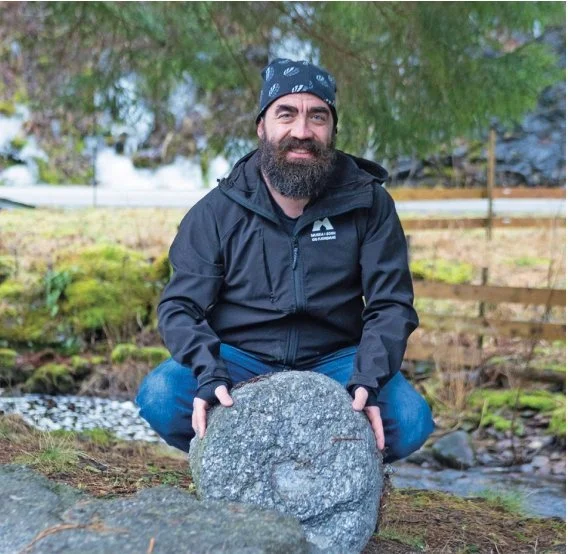
One of the central projects has been the production of a hand quern, a key artefact in the historical production system of the region. Through this process, I have investigated extraction methods, shaping techniques, and tool use, reconstructing the operational sequence from raw material to finished object.
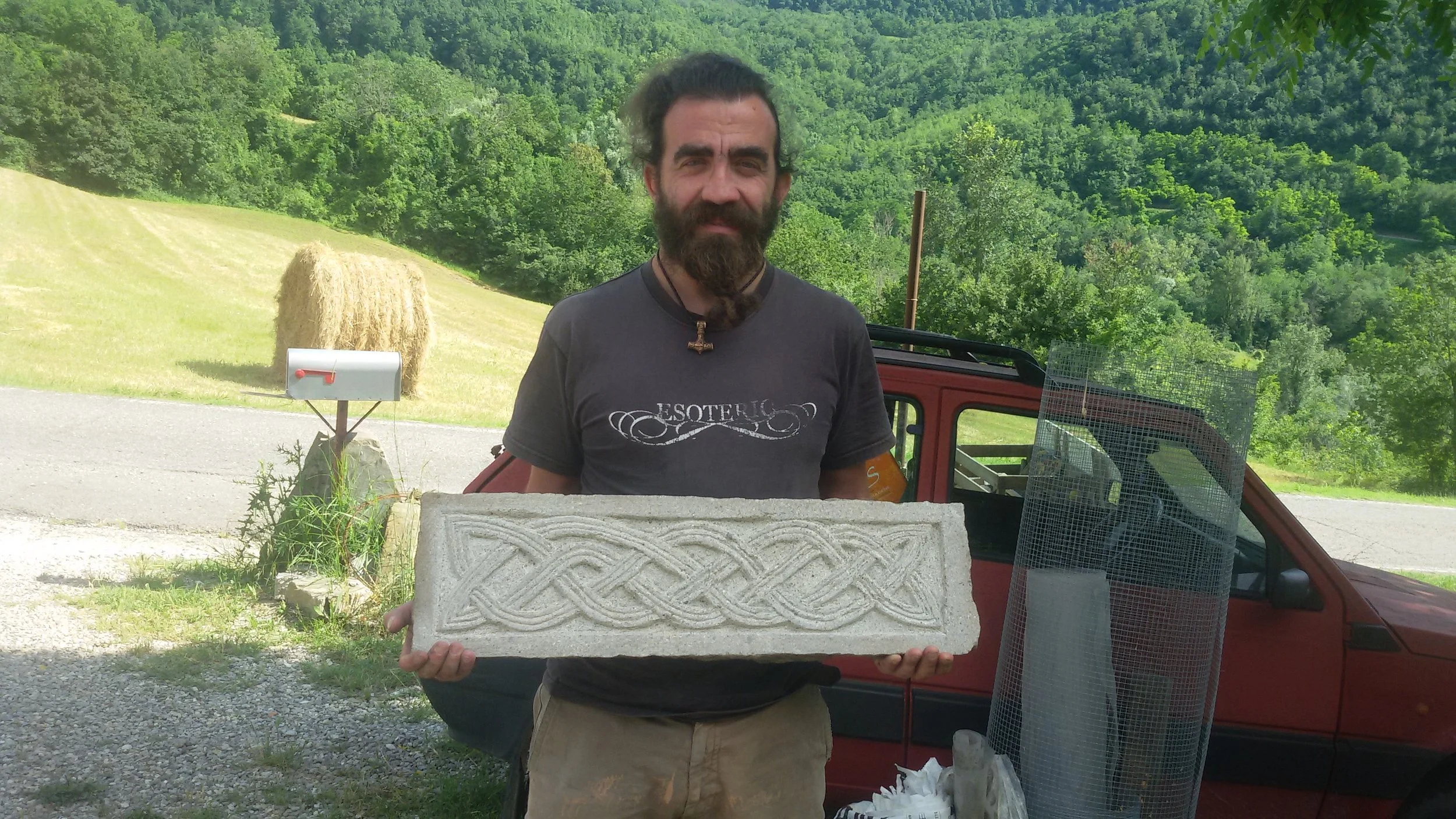
Alongside this, I have worked extensively with soapstone with my students, as well as with other local lithologies, developing carved reliefs inspired by Norse mythology, including the well-known episode of Fenrir and Tyr. These carvings allowed for a deeper exploration of iconography, but above all of the technical gestures required to shape stone surfaces using traditional tools.
Another important strand of experimentation has been the production of Hnefatafl gaming pieces. This project combined material experimentation with the study of historical sources, involving the testing of different raw materials and the reconstruction of manufacturing techniques over several months. In parallel, I have also carried out rune carving, creating dedicatory inscriptions inspired by Old Norse epigraphy, in order to better understand carving sequences and the interaction between text and material.
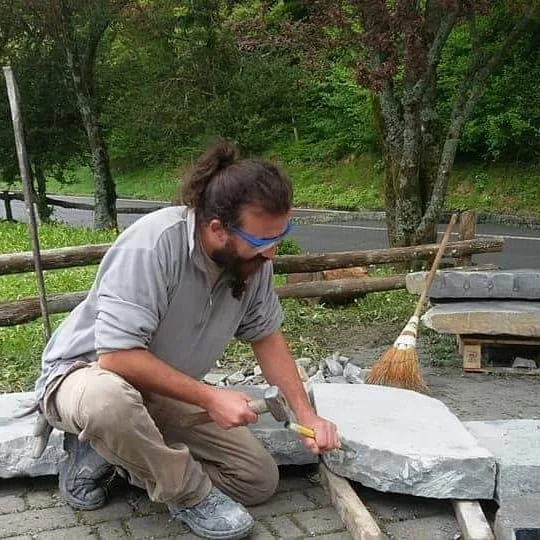
More recently, I have begun experimenting with local marble, a material previously used only sporadically in experimental contexts, including at the Millstone Park in Hyllestad, where a lime kiln is located. My work with mosaic tesserae, however, is not connected to any local archaeological tradition in Norway, but rather stems from a personal line of inquiry. This interest developed during my time working for over a year at a mosaic company in Italy, where I sought to expand my technical skills and knowledge in stone working.
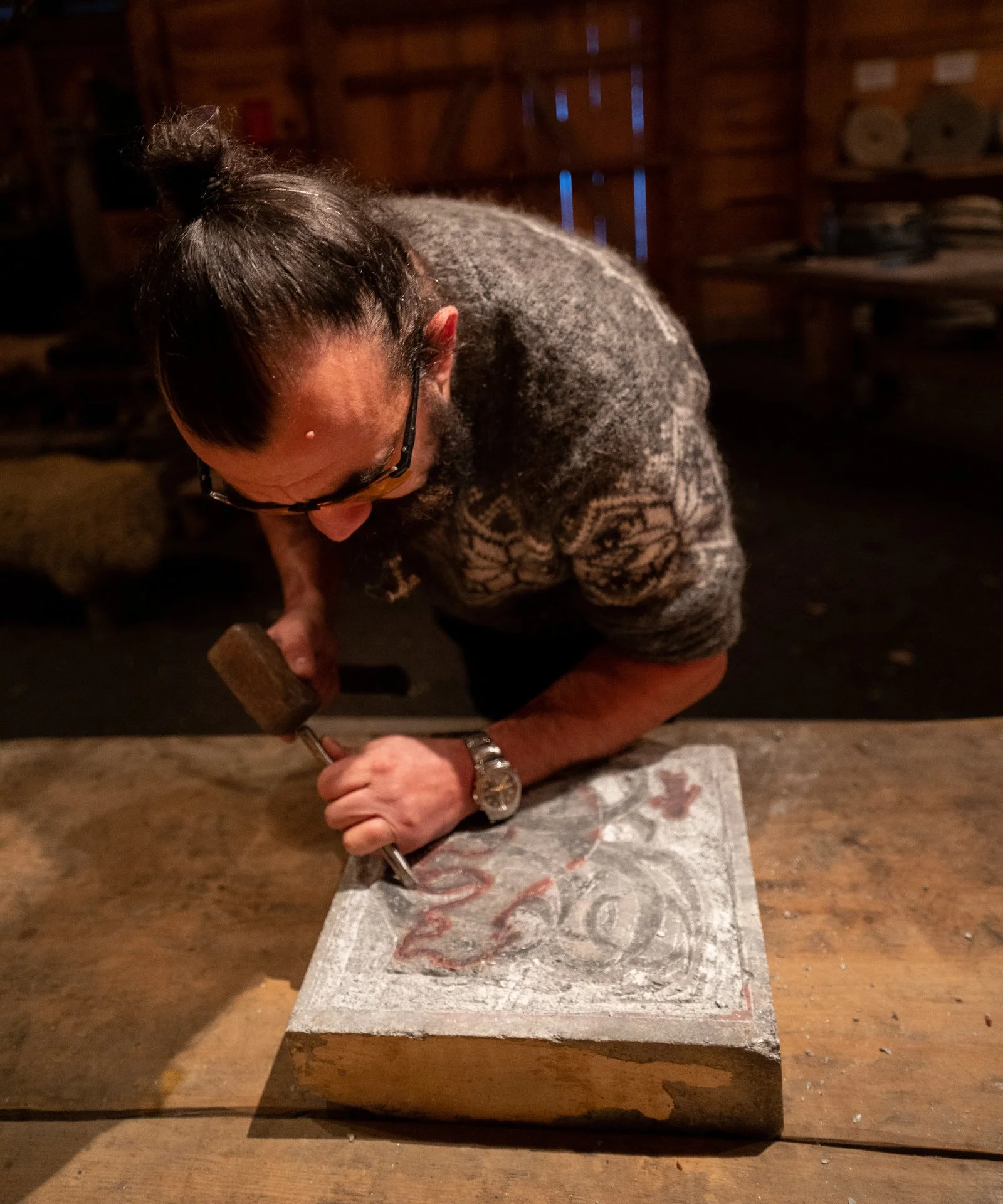
This experience has also informed my educational practice: I have successfully involved both kindergarten and primary school children in mosaic activities, which provide an effective medium for combining manual skills with creativity. At the same time, it is important to emphasize that this line of experimentation is not connected to the archaeological or historical context of Norway, but represents an individual exploration within the broader field of material practice.
All of these activities have been conducted within a structured museum context, working closely with students and participants. The experimental approach has been strictly based on the use of traditional tools and techniques: no modern, mechanical, electric, or motorized equipment has been employed in stone working. This constraint is fundamental, as it allows for a more accurate understanding of past technologies and craftsmanship.
Ultimately, my work seeks to bridge the gap between academic archaeology and embodied practice. By combining research, manual skill, and pedagogy, experimental stone working becomes not only a way to interpret the past, but also a powerful tool for communicating cultural heritage in a tangible and engaging way.
About Filippo:
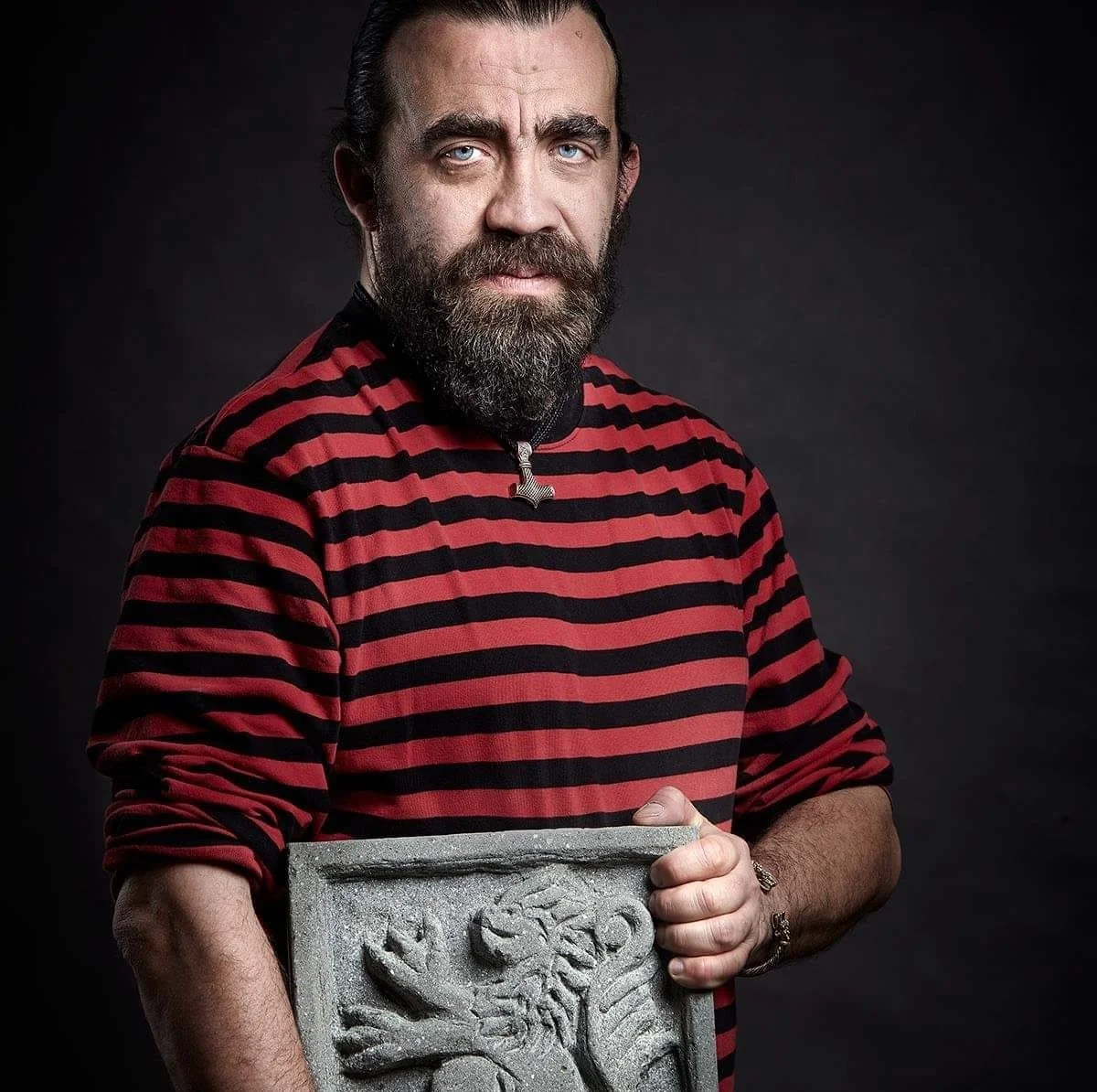
I am an archaeologist and stoneworker with over 25 years of experience in archaeological and historical projects across Europe. I specialize in experimental archaeology, stone craftsmanship, and heritage interpretation, with a particular focus on stone working traditions.
My work integrates field archaeology, material studies, and hands-on reconstruction, as well as digital methodologies such as 3D modelling and database development. I currently work for Musea i Sogn og Fjordane and the Forsvarshistorisk Museum in Norway.
I am open to academic collaborations and welcome opportunities for joint research projects and publications in the field of experimental archaeology and material culture.
All the photos are from the author.
Blog by Filippo Olari