
ArcheoHotspots: Designing Places of Dialogue
Blog by Alexander van de Bunt
This blog follows my previous article, ArcheoHotspots: A Dutch Phenomenon Shaping the Future of Public Participatory Archaeology.
Over the past few years, the number of ArcheoHotspots in the Netherlands has grown rapidly, with more Hotspots opening each year than disappearing. Yet their strength lies not in copying a single model. Every ArcheoHotspot is shaped by its surroundings, local partners, and the people who walk through its doors.
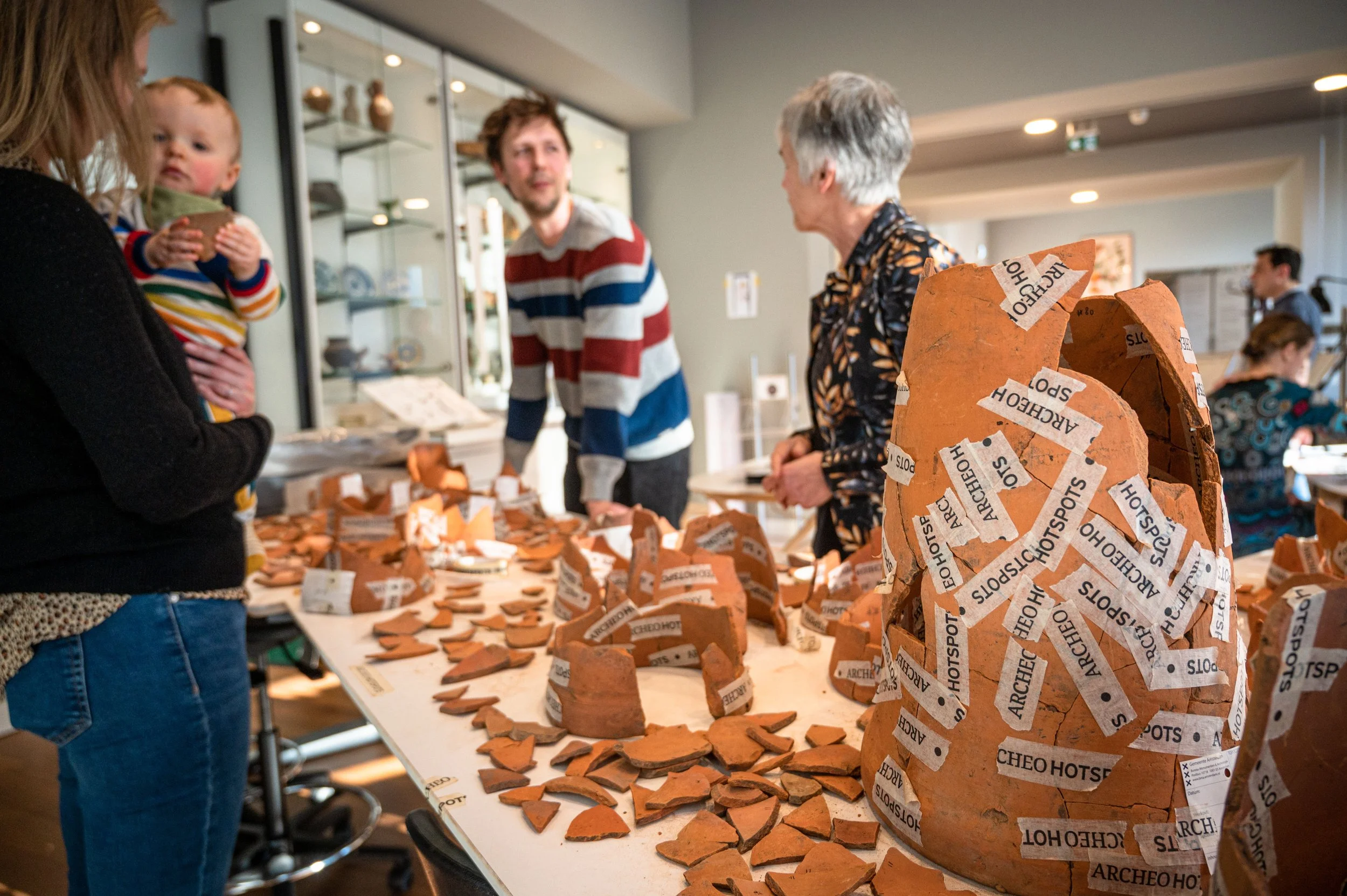
Some offer the familiar experience of sorting and puzzling together archaeological fragments. Others develop their own programmes or experiment with experimental archaeology. Someare permanent ArcheoLabs, while others are temporary pop-ups or mobile installations.
This diversity is not a weakness. It is precisely what makes the concept work.
At their heart, all ArcheoHotspots create places where the public can take part in archaeology as it happens. Not archaeology as something finished and packaged for an audience, but as an ongoing process in which knowledge is created, questions are asked, and interpretations can be challenged.
So how do you design a place for participatory archaeology?
Designing for participation
Creating places where participation, co-creation, and dialogue can genuinely take place is exciting, but difficult.
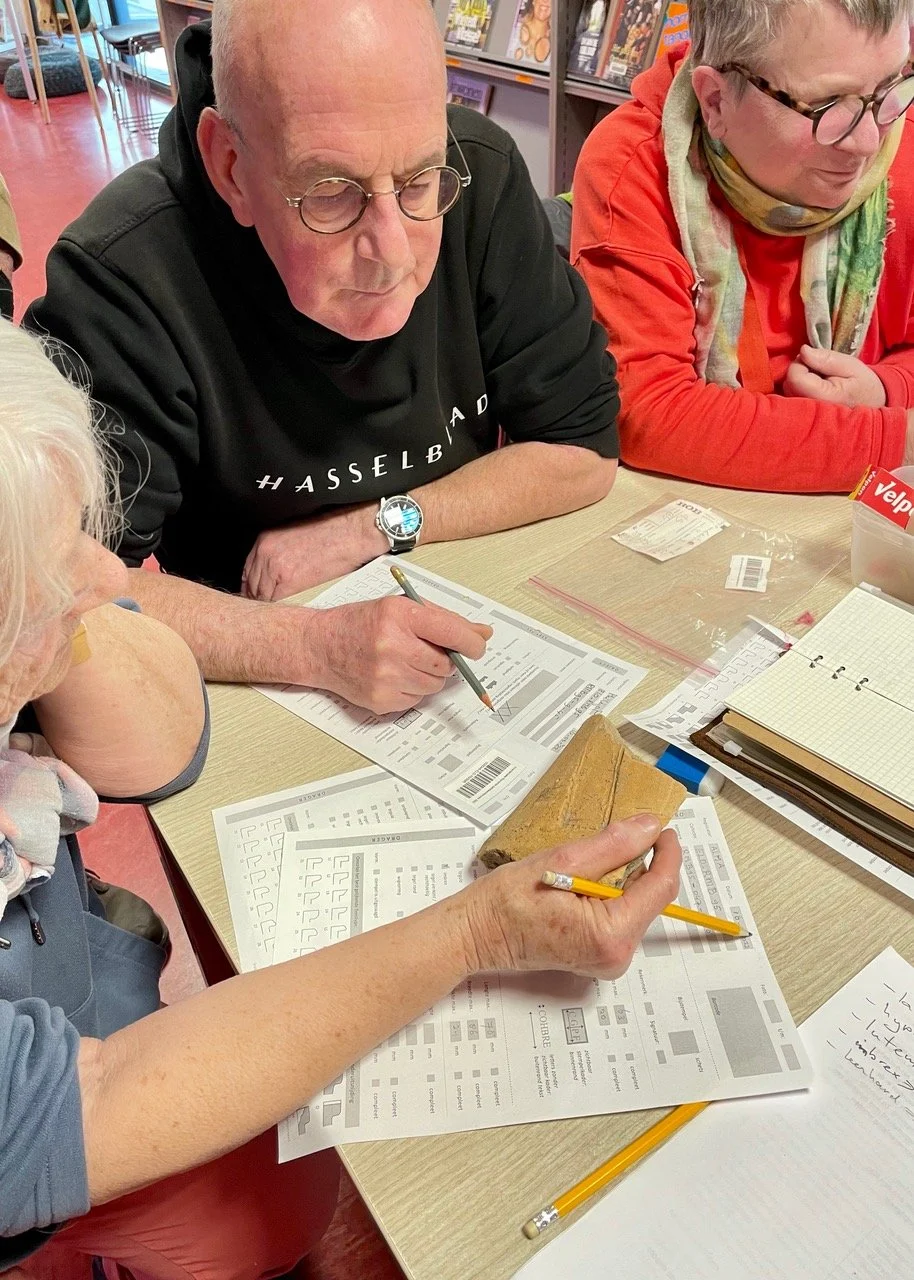
One challenge is letting go of the idea that public engagement is simply another educational activity, repeated with the same story, objects, and programme for every visitor.
If that is how you approach an ArcheoHotspot, you have missed the point.
Participatory archaeology is not about filling an empty space with an activity. It is about creating space for other people, perspectives, and ways of thinking. It means accepting that you are not entirely in control of what happens next.
An ArcheoHotspot should never feel like a performance that can be reset at the end of the day. The projects are real and ongoing. Each time you return, something has changed. More objects have been identified. A new question has emerged. An interpretation has been challenged.
You are not watching archaeology being presented. You are stepping into archaeology in progress.
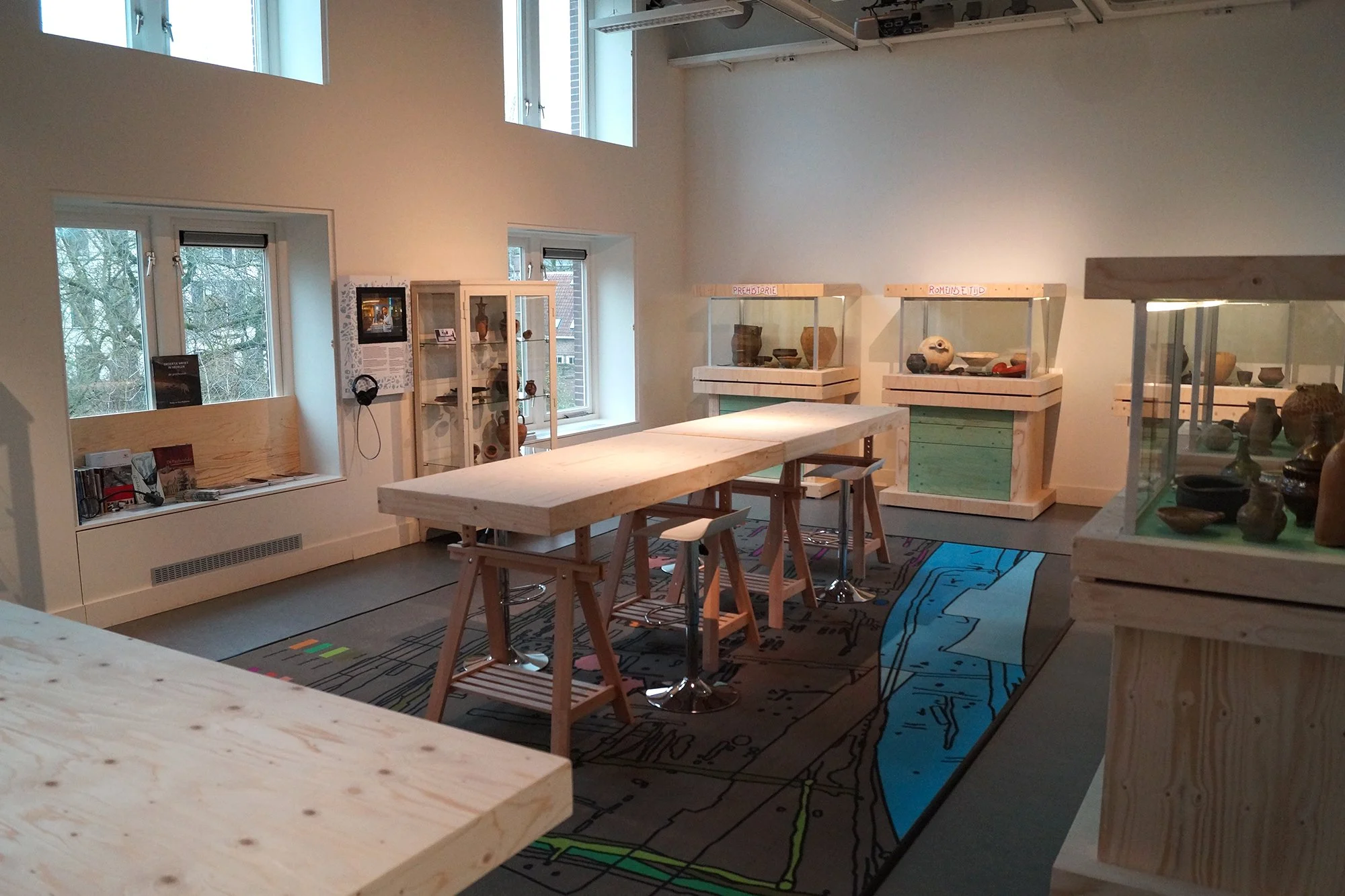
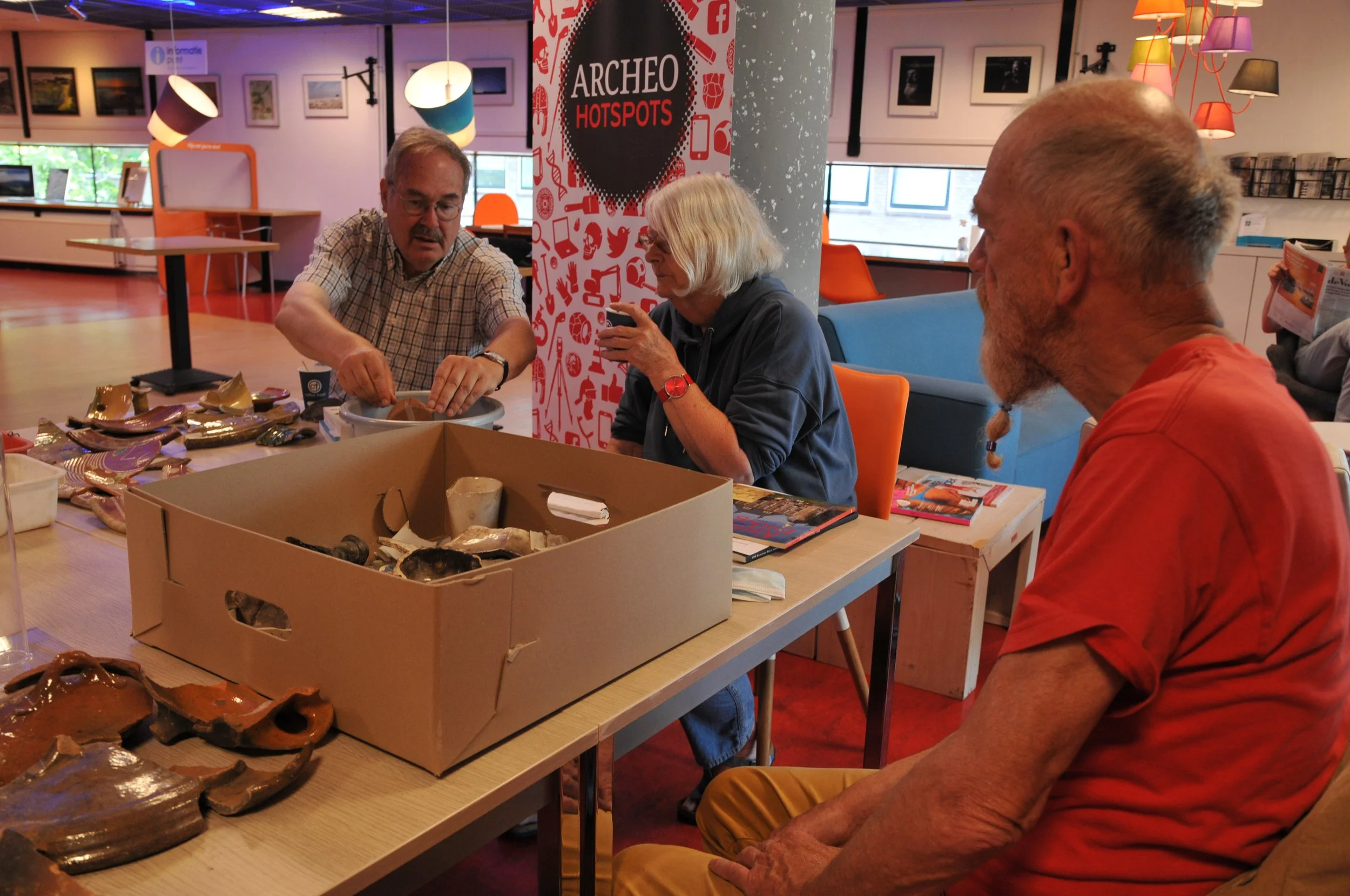
The physical foundation is surprisingly simple: a few chairs, a table, and somewhere to store archaeological material. If space allows, add a comfortable corner where people can sit, talk, and stay awhile.
The space should feel open and welcoming. There is little more discouraging than walking into a room where volunteers sit with their backs to the door, absorbed in their own work. The message is clear: this is our space, not yours.
Think carefully about how people are welcomed. Sometimes, a warm and attentive host is more valuable than a highly specialised scientist who simply wants to get on with their work. To a researcher, an unexpected visitor may feel like an interruption. To an ArcheoHotspot, that visitor is the reason the place exists.
Do not start by broadcasting information. Start by making room.
Invite people to look. To wonder. To ask questions. Pull up a chair. Pick something up. Join in.
And then be prepared to be surprised.
The most interesting thing about a participatory space is not what you have planned for the public to do. It is what they do that you never expected.
Rethinking what you know best
Archaeologists are obsessed with methods, protocols, and standards of quality. And rightly so. But sometimes these standards take over to such an extent that we forget one crucial thing: there is an audience.
And that audience may have little interest in our quality standards. To be honest, neither do many volunteers.
The challenge is not to abandon archaeological rigour, but to rethink how we bring people into the process. If it becomes so specialised that no one can see where they fit in, you have already lost them.
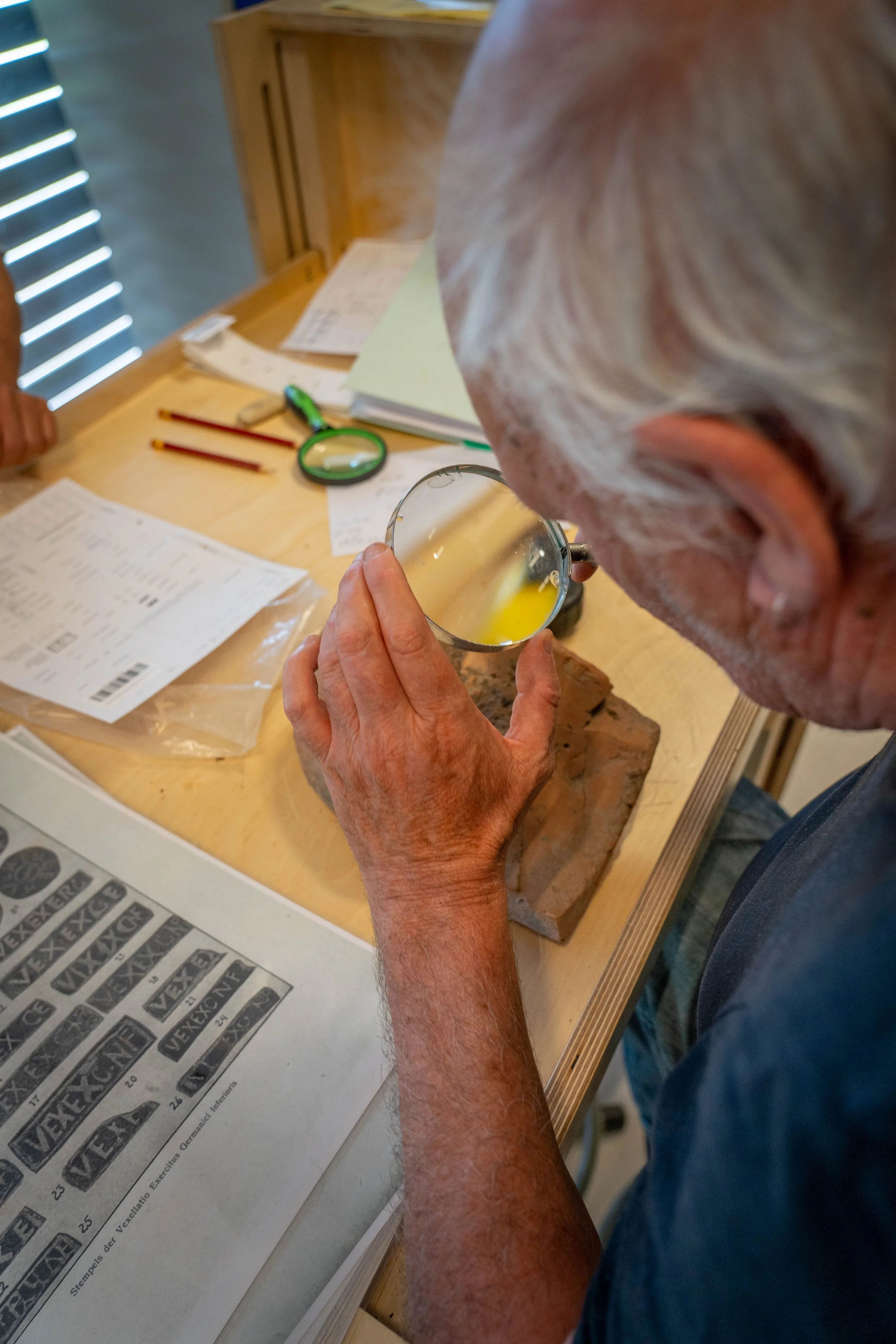
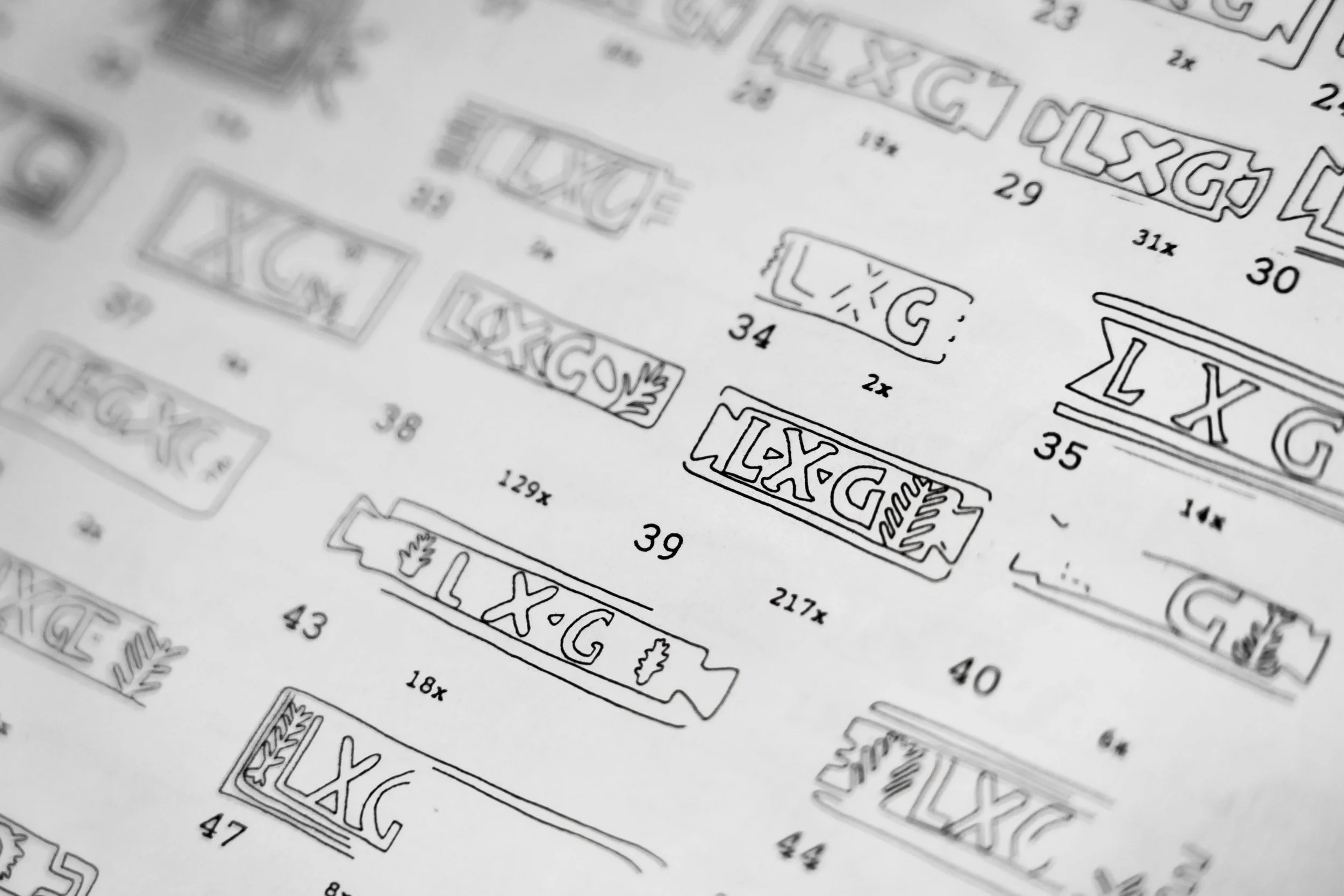
A good example is the Tegula-Imbrex project, which travelled between several ArcheoHotspots along the former Roman frontier of the Rhine. Participants studied Roman roof tiles and the military stamps impressed into them. By analysing these stamps, researchers gained new insights into Roman fort construction, the military units active in the region, and their chronology. The project even revealed cohorts and legions previously unknown from written sources.
The conventional approach is simple: take a magnifying glass, examine the stamp, and try to identify it.
Scientifically sound, perhaps. But hardly an obvious invitation to the public.
So why not think a little more like Indiana Jones and the Last Crusade?
Give people tracing paper and soft drawing chalk. Ask them to make a rubbing of the stamp. Then ask: What do you see?
Suddenly, an exercise in archaeological identification becomes an act of discovery. People can experiment, compare their findings, and interpret what is in front of them. The best rubbings can be scanned, added to the research database, and ultimately become part of the scientific publication.
It sounds simple. And it is.
But that simple design choice gives people something powerful: ownership. Imagine seeing your own rubbing appear in a database, publication, or research result. You can point to it and say:
“I made that.”
That feeling matters.
Participants can even take their rubbing home, carrying away a small souvenir of a Roman roof tile and a tangible connection to an archaeological project still unfolding.
The scientific process remains rigorous. The route into it has simply been redesigned. The public is no longer standing outside, looking in. They have been given a way to enter.
And that is where the real potential of participatory archaeology lies. What will you do with what people contribute? Will it feed into a publication, a lecture, or a network meeting? Could it become an exhibition, a visual installation, or a work of art?
Sometimes, all it takes to bring archaeology and the public togethe is a tegula, an imbrex, some tracing paper, and a simple invitation: What do you see?
About the Author

Alexander van de Bunt is a Dutch archaeologist, writer, and photographer with a strong focus on public archaeology. Since 2022, he has served as the national coordinator of ArcheoHotspots.
In 2023, he produced a reconstruction of the Tiel Bronze Age sun calendar, which gained international attention. He is the author of Wee de overwonnenen. Germanen, Kelten en Romeinen in de Lage Landen (2020) and Wereldreizigers. De ontdekking van Europa (2026). His debut publication was shortlisted for the Homerus Prize in 2021.
Alexander van de Bunt Instagram
The photographs are made by the author and the volunteers of the ArcheoHotspot in Oegstgeest.
Blog by Alexander van de Bunt