Mobilizing the Hunt for Knowledge
Blog by Sean Sullivan
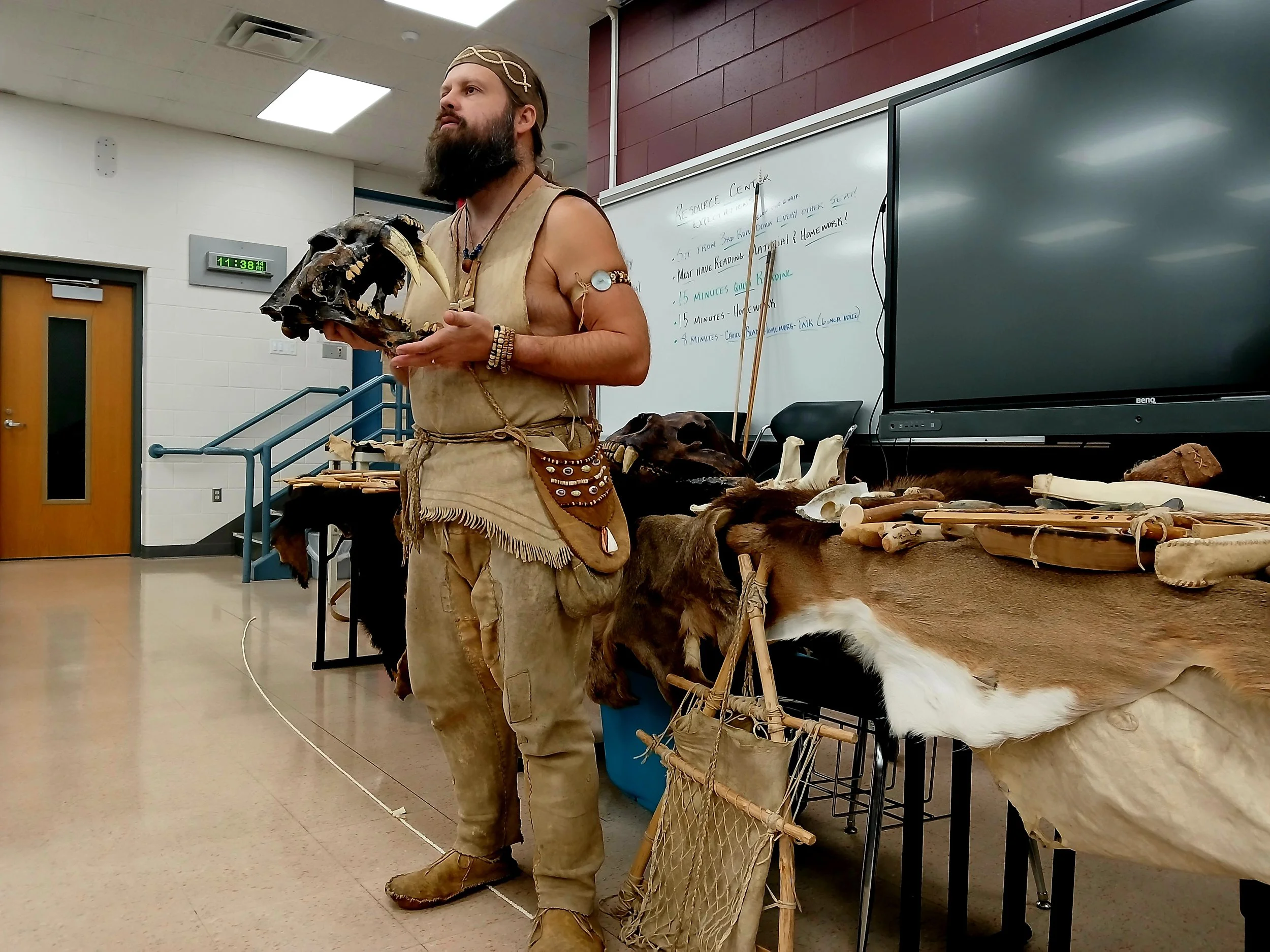
For the last several years, I have been working to build and expand a mobile museum concept. As “The Mammoth Hunter”, I travel to locations, mainly around the state of Wisconsin, USA, and bring educational programs to libraries, schools, historical societies, and other educators. I combine experiential and experimental archaeology with reenactment and storytelling to bring the upper Paleolithic to life. I have spent a great deal of time working to build the majority of my display using accurate tools, techniques, and materials.
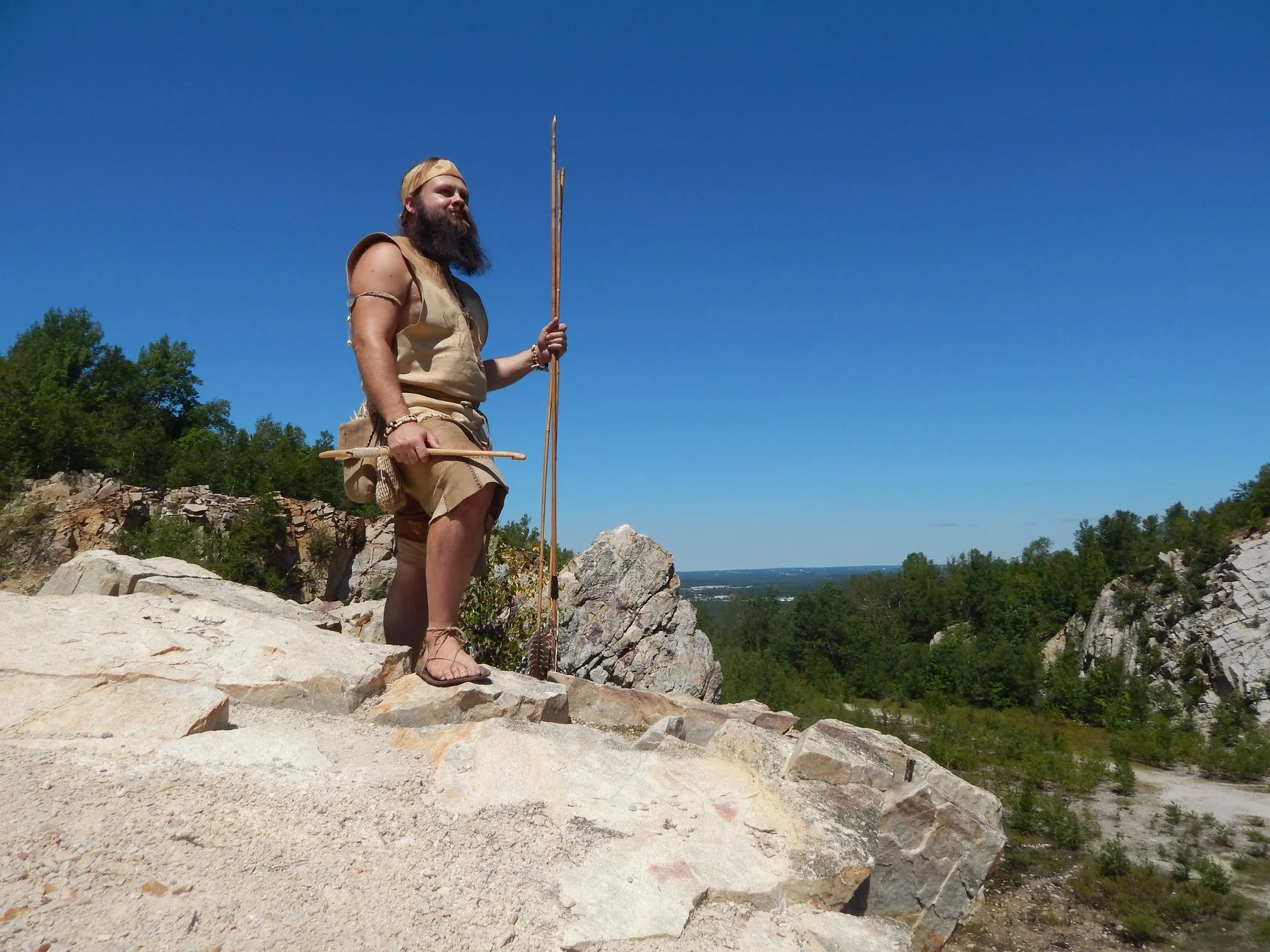
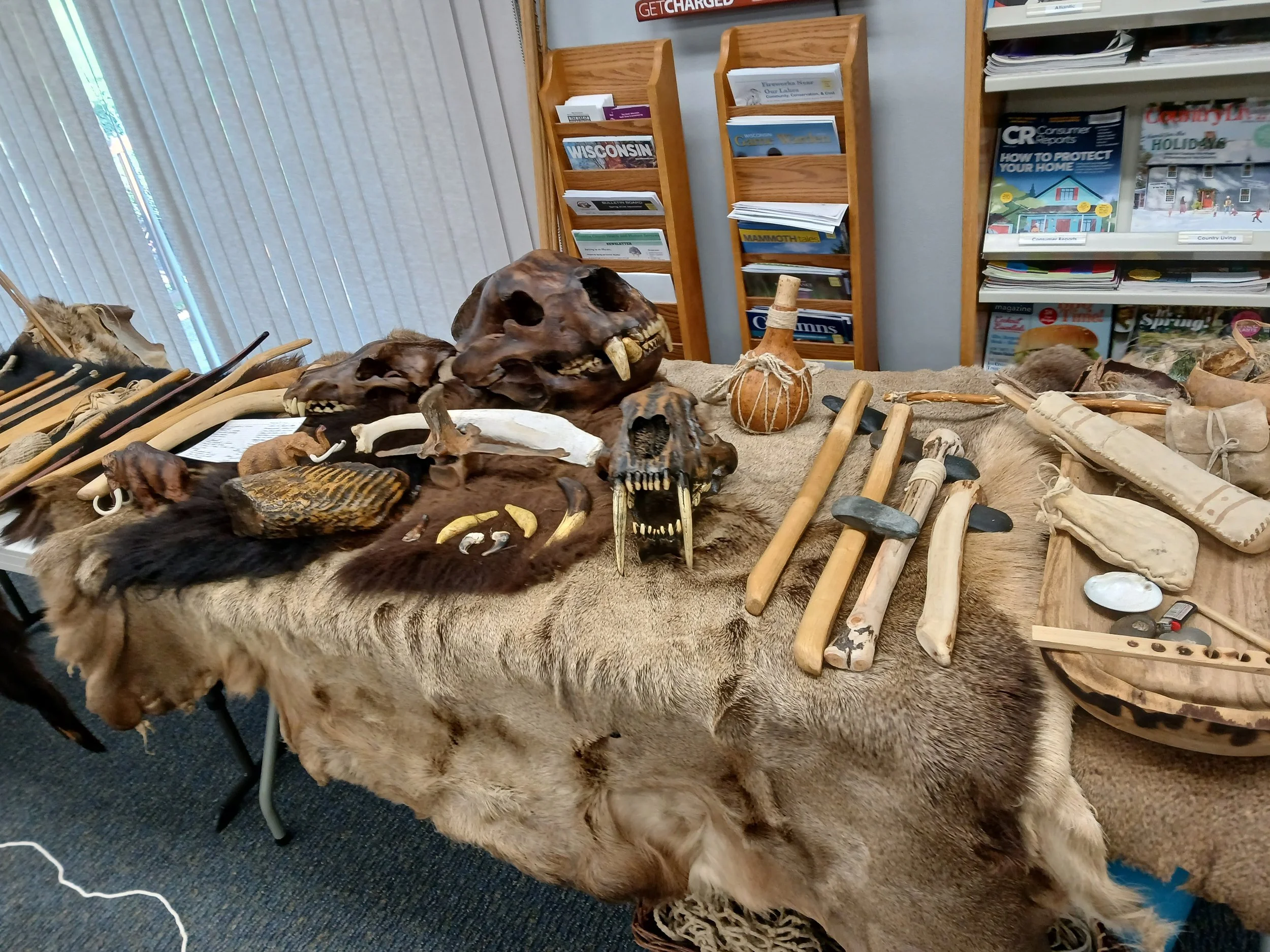
The most popular program I offer takes the audience through a woolly mammoth hunt based on regionally local finds. I introduce folks to the concept of experiential archaeology as a starting point. From there, we delve into the hunt. I discuss the tools of the trade, spears and atlatls, and how we use them to get our mammoth. I talk about the Ice Age fauna we might encounter using a number of fossil replicas. I demonstrate the process of starting a fire by friction, while explaining the tremendous importance of fire in prehistoric daily life. Once our group is “safe by the fire” and well fed on mammoth steak, we celebrate with prehistoric musical instruments, including bone flutes and bull roarers. The program wraps up with the audience having the opportunity to examine the large display.
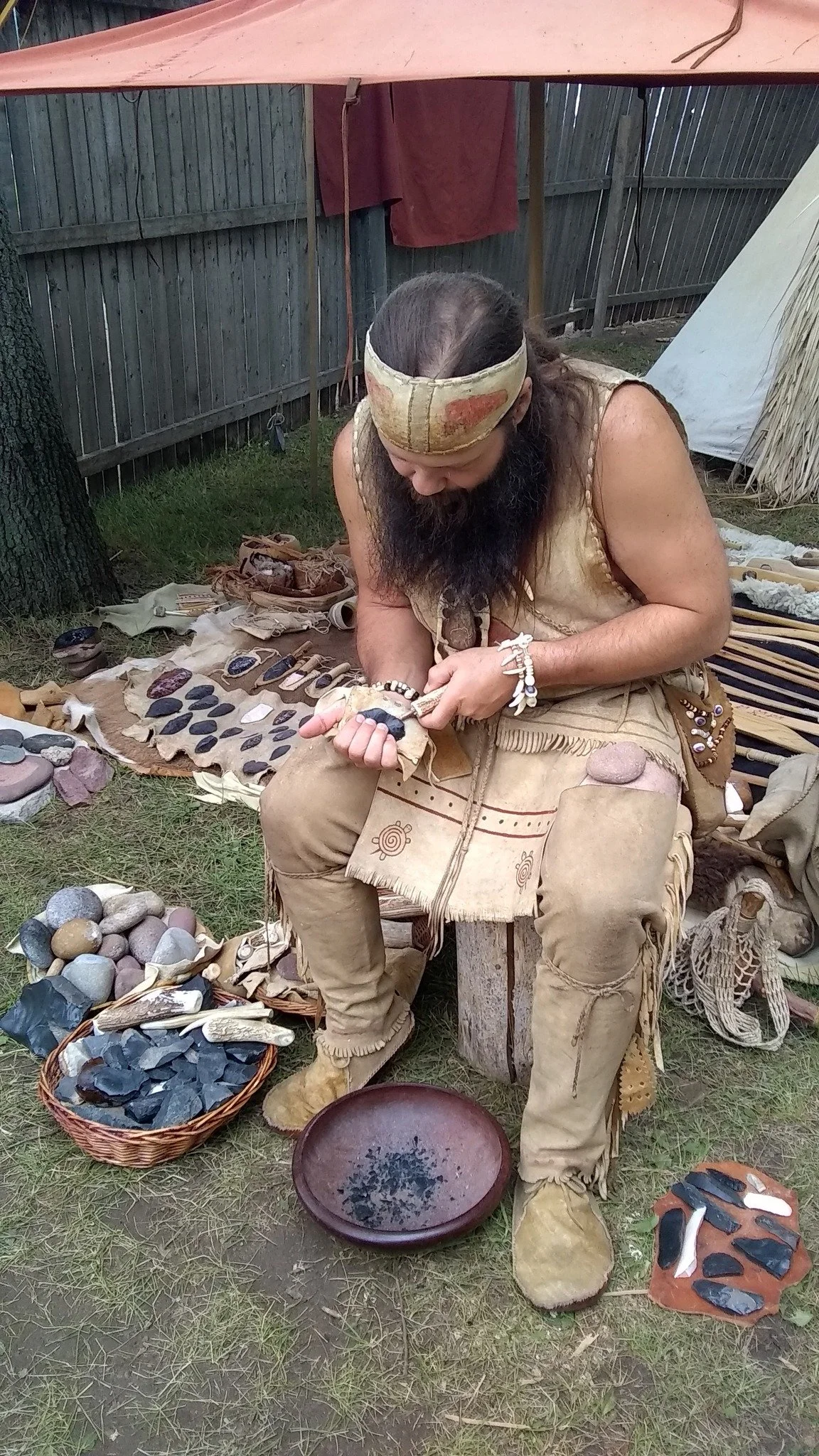
I spend a lot of time researching newly published finds and papers in an effort to keep as up to date as possible with the newest discoveries. I also practice a wide range of “primitive” skills, including flint knapping, friction fire, tanning, hand sewing, fiber arts, foraging, atlatl & archery, and much more. My current combination of skill sets has taken me more than 20 years to acquire. Even so, I tell students I am likely at the level of a 7-year-old in the Paleolithic.
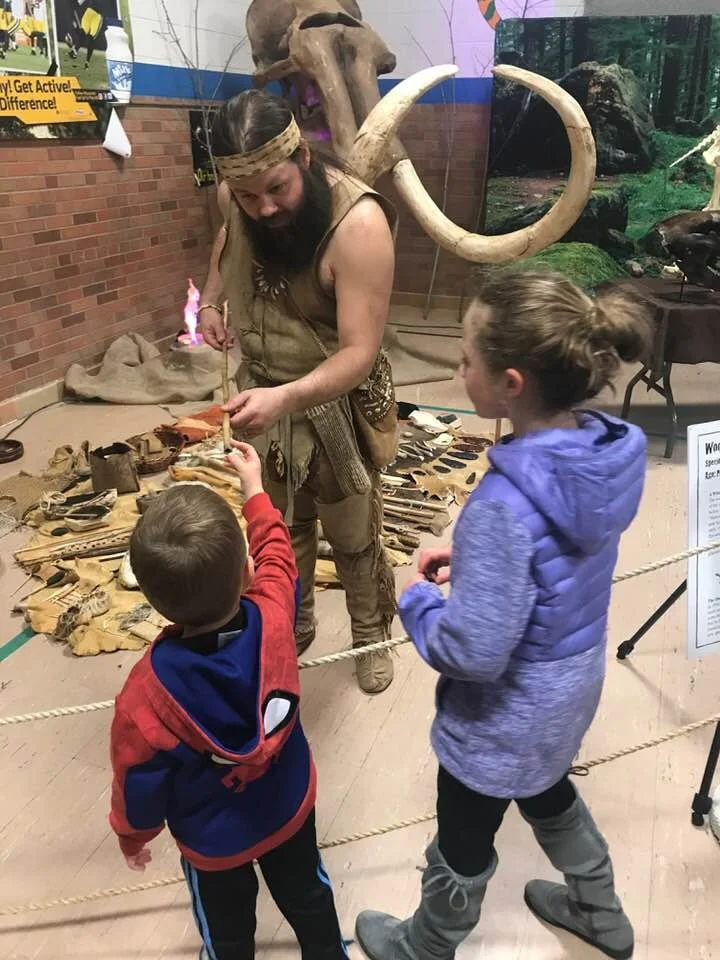
Since the archaeological record for the upper Paleolithic is missing a great deal of detail, I have had to fill in a lot of gaps to produce a functional representation of daily life. To fill in those missing pieces, I use surviving hunter/gatherer groups as a model. I try to avoid using anything specific to an individual group or culture. My goal is to give a reasonably accurate representation of prehistoric life with room for improvement as new discoveries are made.
In my day-to-day life, I make and use many of the same types of tools, clothing, and materials I talk about in my programs. By actually living my daily life (as much as one can in the modern world) with the clothing, tools, etc. that I use to present, I can teach based on first-hand experience. I can tell students how long my moccasins last and what is needed to maintain my clothing. I can show how well an atlatl works for hunting and fishing. I can make and demonstrate stone tools, light my campfire with a hand drill, and so on. I not only offer a verbal explanation but also demonstrate prehistoric daily life in real time.
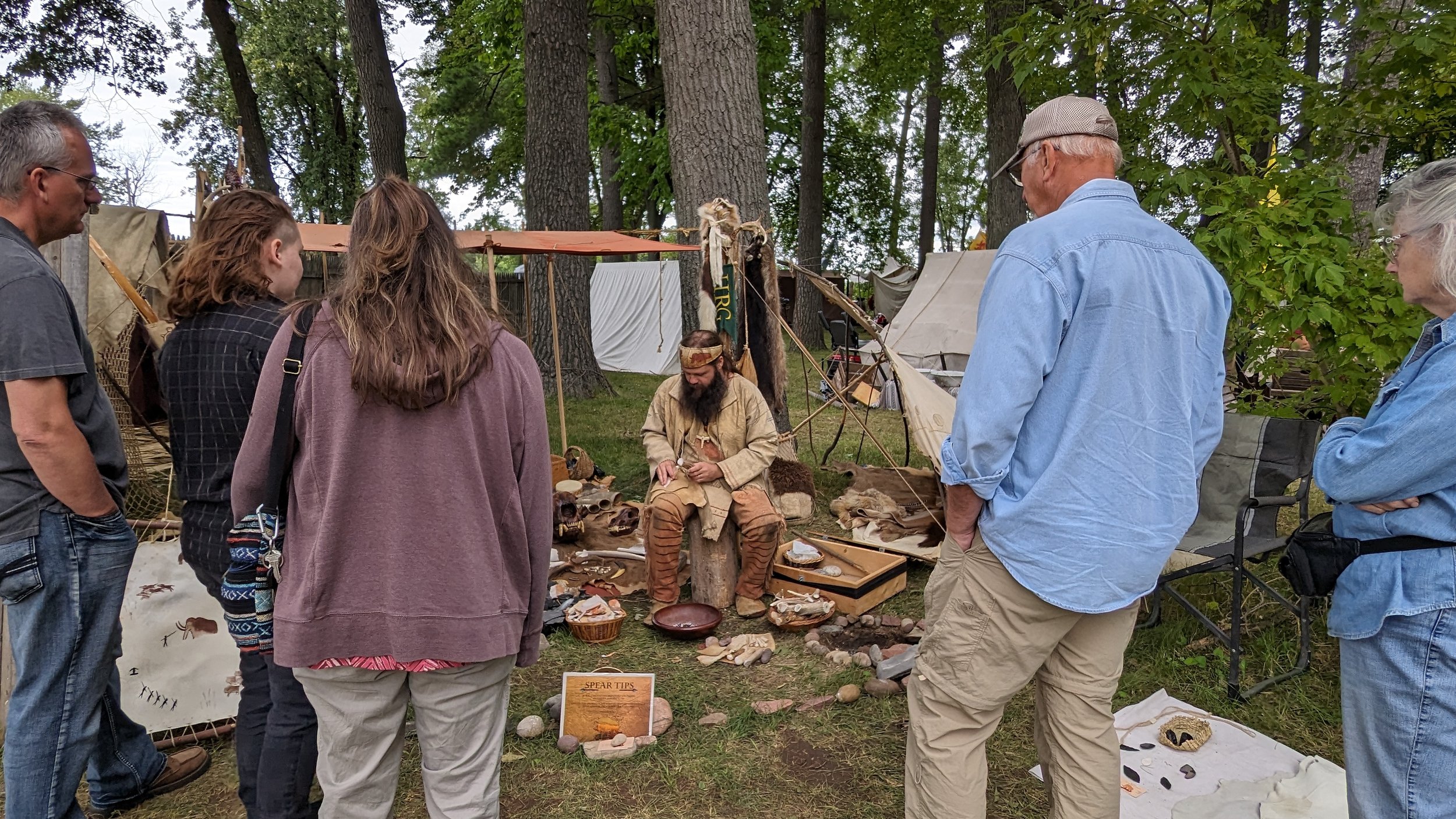
Being able to speak to groups about not only the fossils and artifacts, but what those things were actually a part of when they were whole has proven to be tremendously fascinating and inspiring to audiences. Being able to offer them the chance to touch and examine functional replicas that have seen real-world use opens up their minds to the idea that they could do this too. Nothing inspires a student’s mind to curiosity like being able to hold something they can make and explore themselves.
It is my hope, as I continue to learn, build, and teach, that I am able to inspire the younger generations to join the hunt for knowledge. It makes me very happy to think that some of the students I introduced to our shared past will go on to make discoveries that change how we understand our ancient roots.