
Music-Archaeology: Finding Sounds for the Past
Blog by Michael Dollendorf
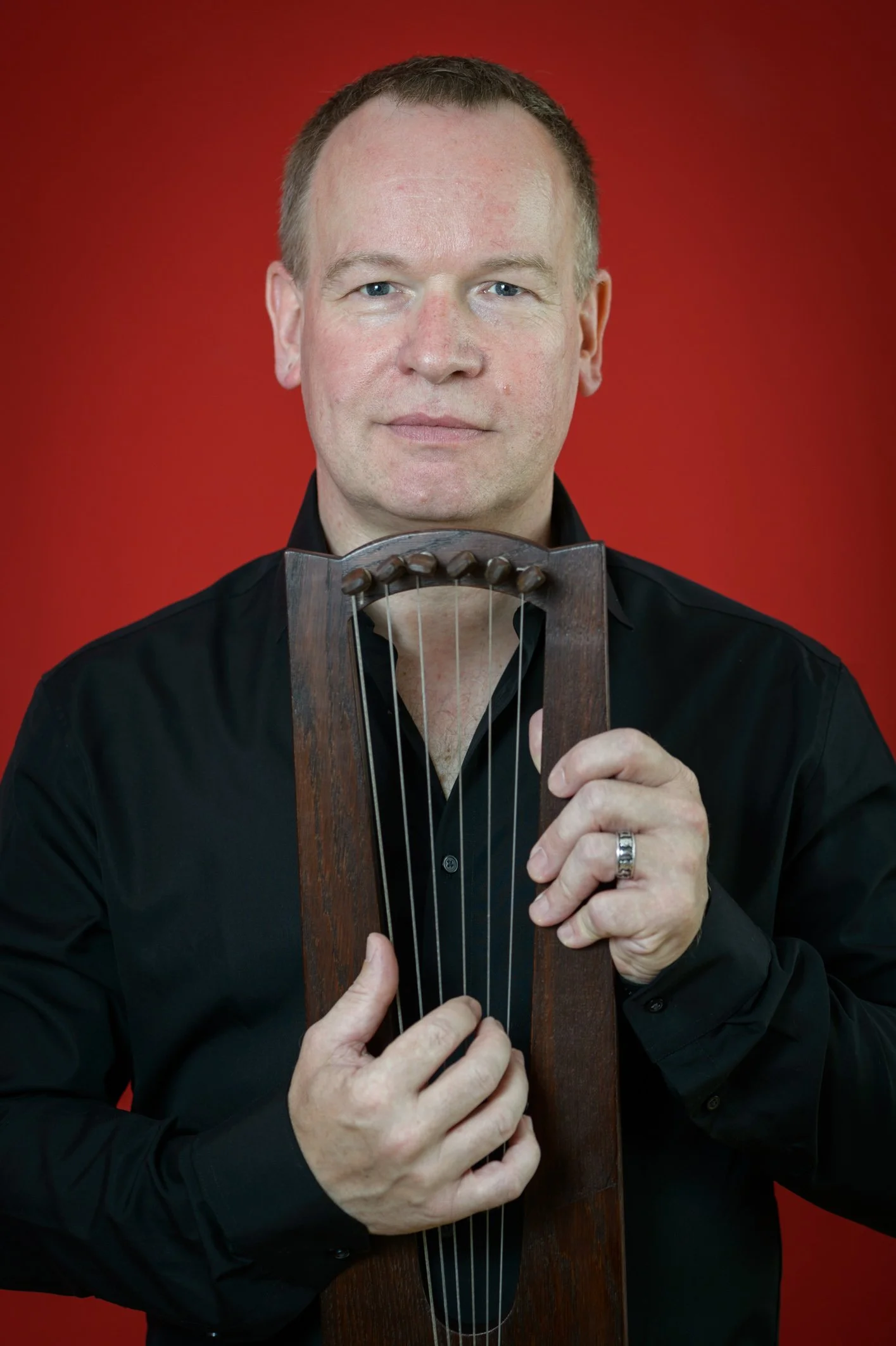
Michael Dollendorf.
My background is ethnomusicology, and I'm very fond of Margaret Mead's method of “close description,” just that I don't apply it to a society of islanders in the South Pacific but to European cultures of the past. The most important thing is not to compare, but to describe a culture in its own terms from the inside. You pick a time and a place and dig as deep as you can.
In the “Living History” scene, I'm most impressed by groups or institutions who really pin it down and work out their act meticulously. The attention to detail, the work that goes into making natural dyes and getting the hues of a fabric right, or the work that goes into copies of medieval armor down to the last rivet, I find most impressive. Unfortunately, in music this is rare.
Some of my performances are inspired by archaeological finds, like the two Alemannic lyres from the 6th-century excavations at Oberflacht/Swabia. There are a few instruments like them, the most famous being Sutton Hoo, but also instruments from graves in Cologne and Trossingen were very much intact, so the lyres could be reconstructed. Many ivory or bone bridges were found all over Scandinavia. We can safely assume that most lyres had six strings, usually made from gut. But how to tune these strings? Here we need a knowledge of music theory going back to Greek and Roman antiquity. We also want to study early chant to learn about the range of melodies and structurally important notes. We need to work with string makers who know how to turn sheep's guts into musical strings that will sound and not break under tension. Once the instrument sounds, we need to find literature from the period, heroic songs or stories to tell, and work them into a performance that can grab a modern audience.
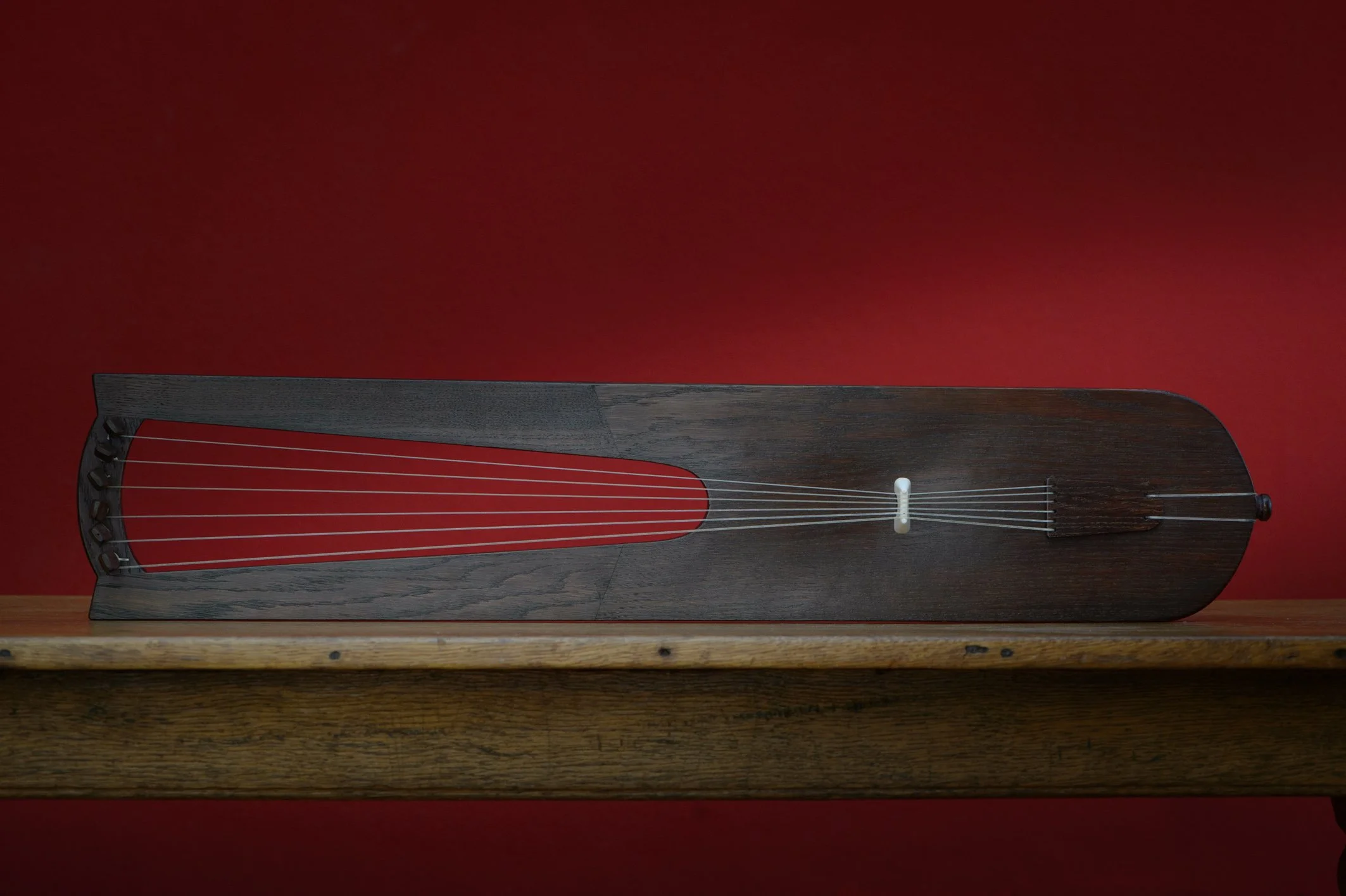
Alemannic Lyre.
In other cases, I go the other way around and start with a poet, let's say from around 1200, study his works, his time, his place, go there and take photos of musicians shown at Romanesque or Gothic cathedrals, or find pictures in illuminated manuscripts which I can connect to him. With these, I go to specialized instrument builders, and we have weeks of discussions on how to turn these illustrations into wood and sound. Here again, it is absolutely necessary to know the theoretical background and musical writings of the place and period. A vielle played in the south of France might have been very different from a gîga from Germany. Medieval flutes we know from Germany and the North, but not from France, Spain, or Italy.
I find it mandatory to find a very specific sound for each time and place. A German Minnesinger active at the imperial court in Vienna needs a different voice than King Richard I in Poitiers. Here language comes first, but there are various instruments that can add a local color. I hear people tell me that commissioning instruments all the time is too expensive. I can only say that keeping a horse or two, training them for jousting, having armor fitted and custom-made for yourself and your horse, and re-enacting tournaments is costly too. A vielle doesn't cost more than keeping a horse for three months.
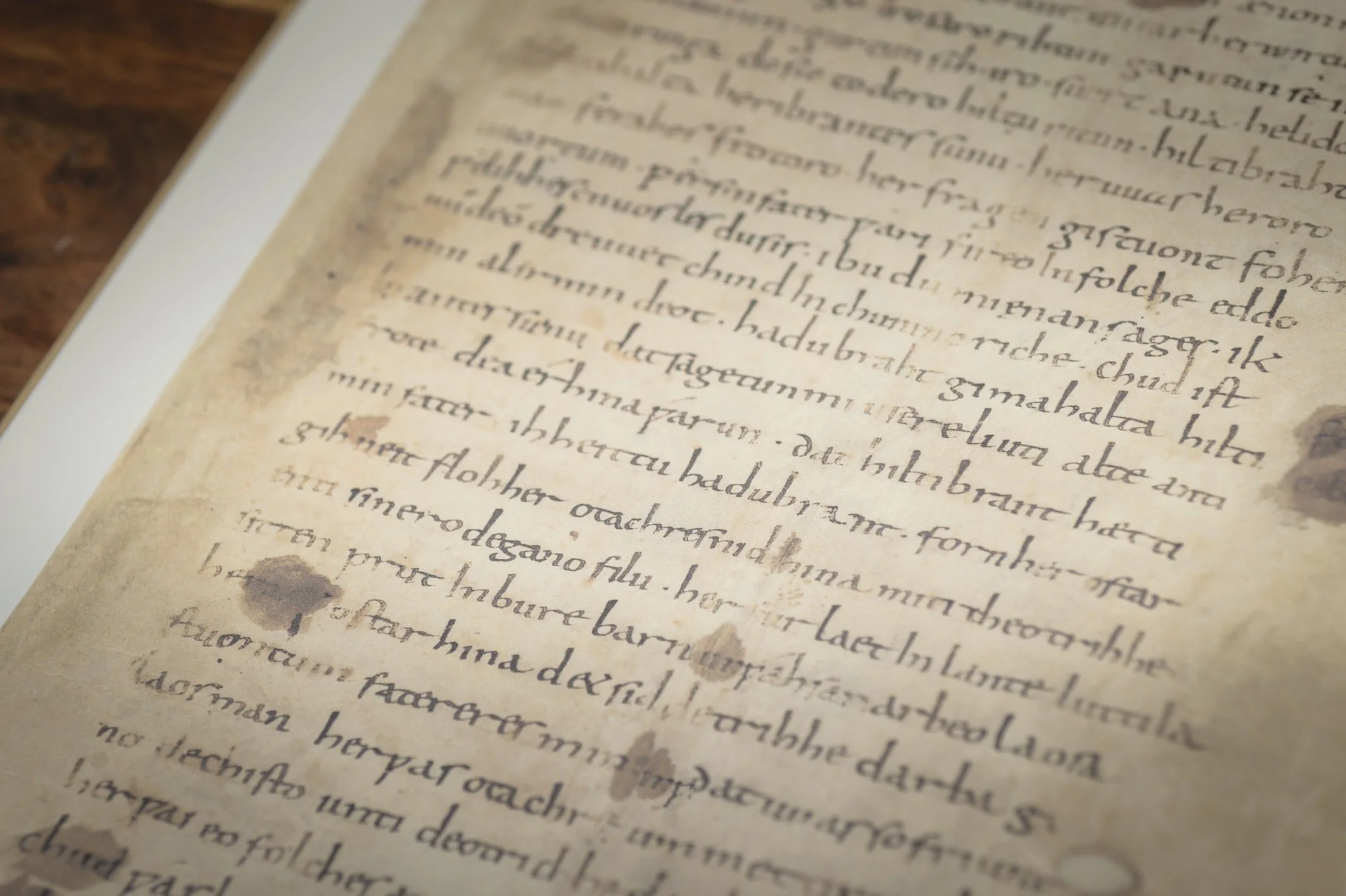
Hildebrandslied.
The next problem we face is the actual performance situation. Society at court was small, maybe 15 to 30 people in a hall with some acoustics. Ideal. As a trained singer, I can also fill a much bigger space, but it has to be indoors. Contact with the audience is very important and gets lost in a large hall. Some courts, like in Aquitaine, were even smaller, and there was no real separation between poets and listeners, a situation we also hear about from English monasteries. Everybody there offered a song to the others. Much of the poetry is quite strange to us, or we don't really understand the meaning, because it is full of inside jokes which members of the inner circle would have laughed about, but the jokes are lost on us.
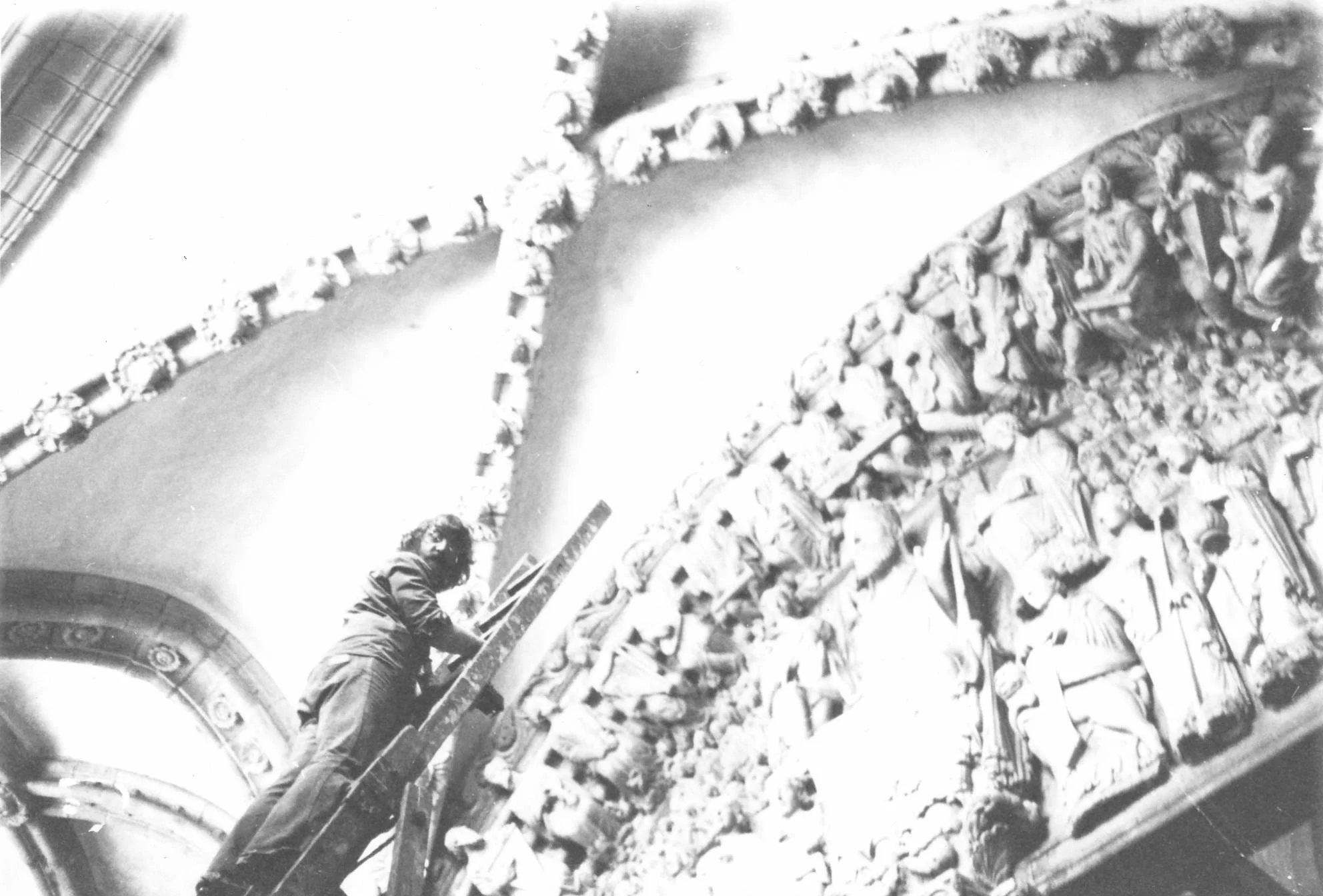
Organistrum depiction in Santiago de Compostella.
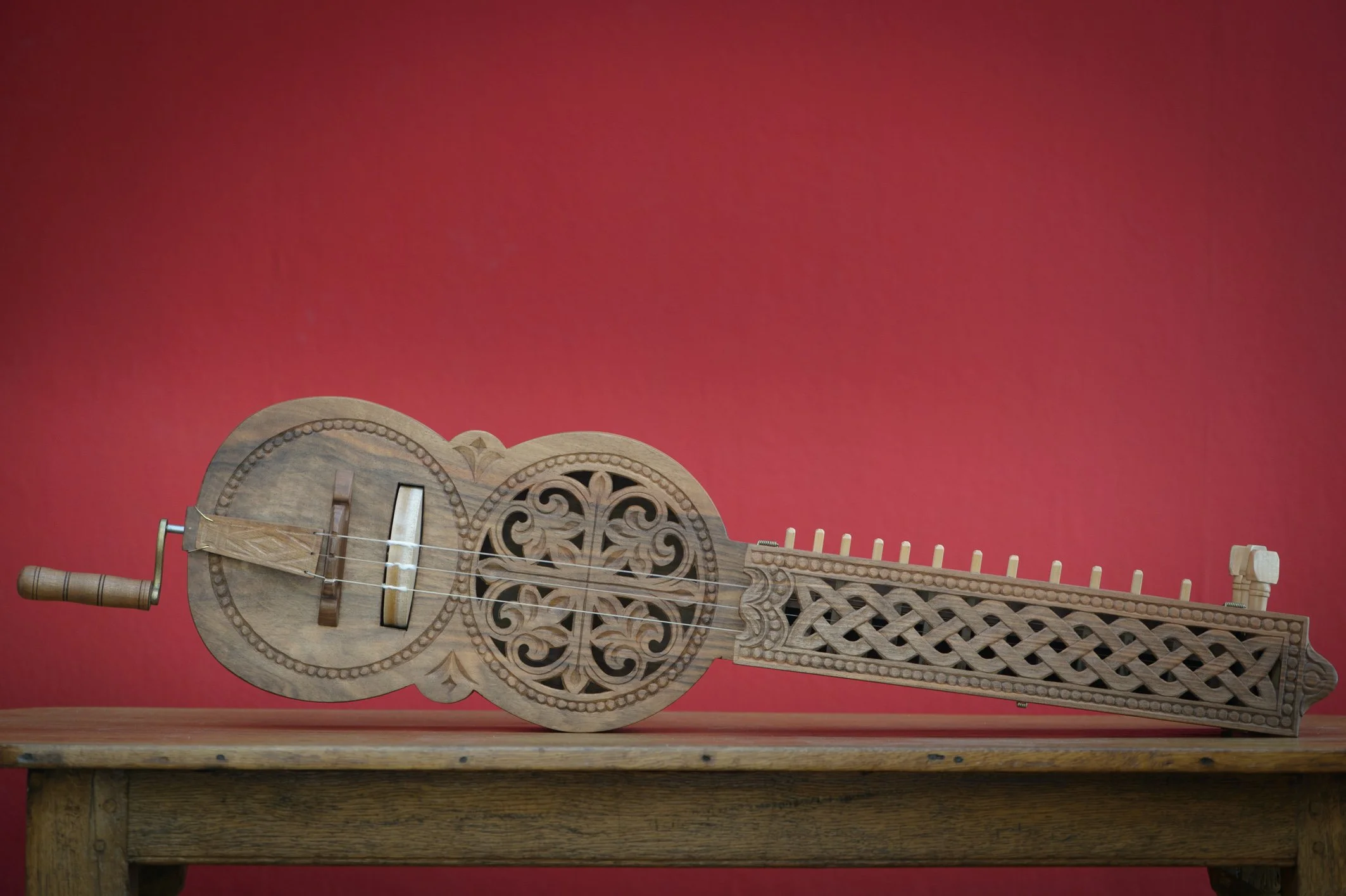
Reconstruction of the organistrum of Santiago de Compostella.
How can we present songs in a language nobody speaks anymore? That needs some translation and explanation, which must be worked out carefully and adjusted to the audience. In school projects with young listeners, I will tell the story differently than in front of university students or linguists.
I had the great honor of performing parts of the Nibelungenlied in Stuttgart when the original manuscript was transferred from private ownership in a noble family's library into the hands of the Landesbibliothek. I was asked which parts I'd like to perform, and the book was there, opened at the very section for everybody to see. People could read along while I was re-oralizing the tale.
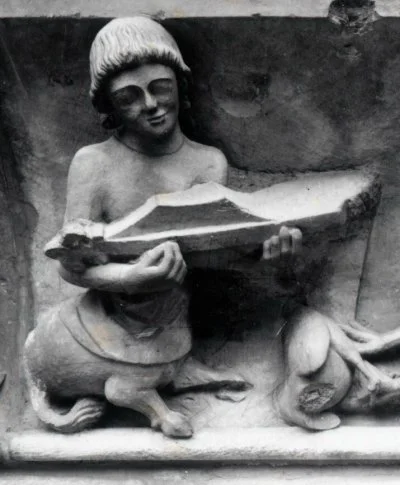
Citole feuille de houx in Strasbourg.
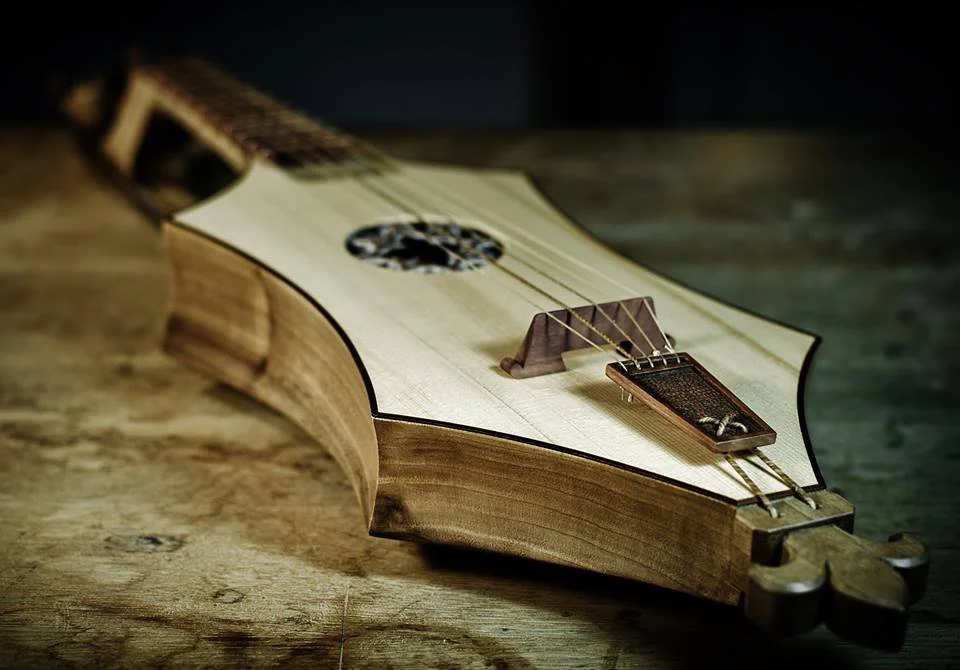
Reconstruction of the Citole.
The most important aspect of my work is to bring songs and stories back to life by transferring letters from pages into sound again. The old languages are declared “dead,” sounds are lost, and what used to be delivered in a vivid tradition of storytelling came to us as literature. Archaeological fragments of musical instruments behind glass don't make a sound either.
In order to retrieve these sounds, we need to learn the languages, recite the poetry, reconstruct the instruments, read up on the music theory of antiquity, and learn how to tune and play them. A big task, because we are talking about a period of around 1000 years and many tales that deserve to be listened to again.
In relation to Living History, music is extremely hard to integrate. Music is pure emotion. How do we express the emotions of these stories and not end up in fantasy land? How much of 2026 do we need to explain? With my concerts and lectures, I try to show different ways to plausibly answer these questions and how to integrate music and storytelling into education and Living History.
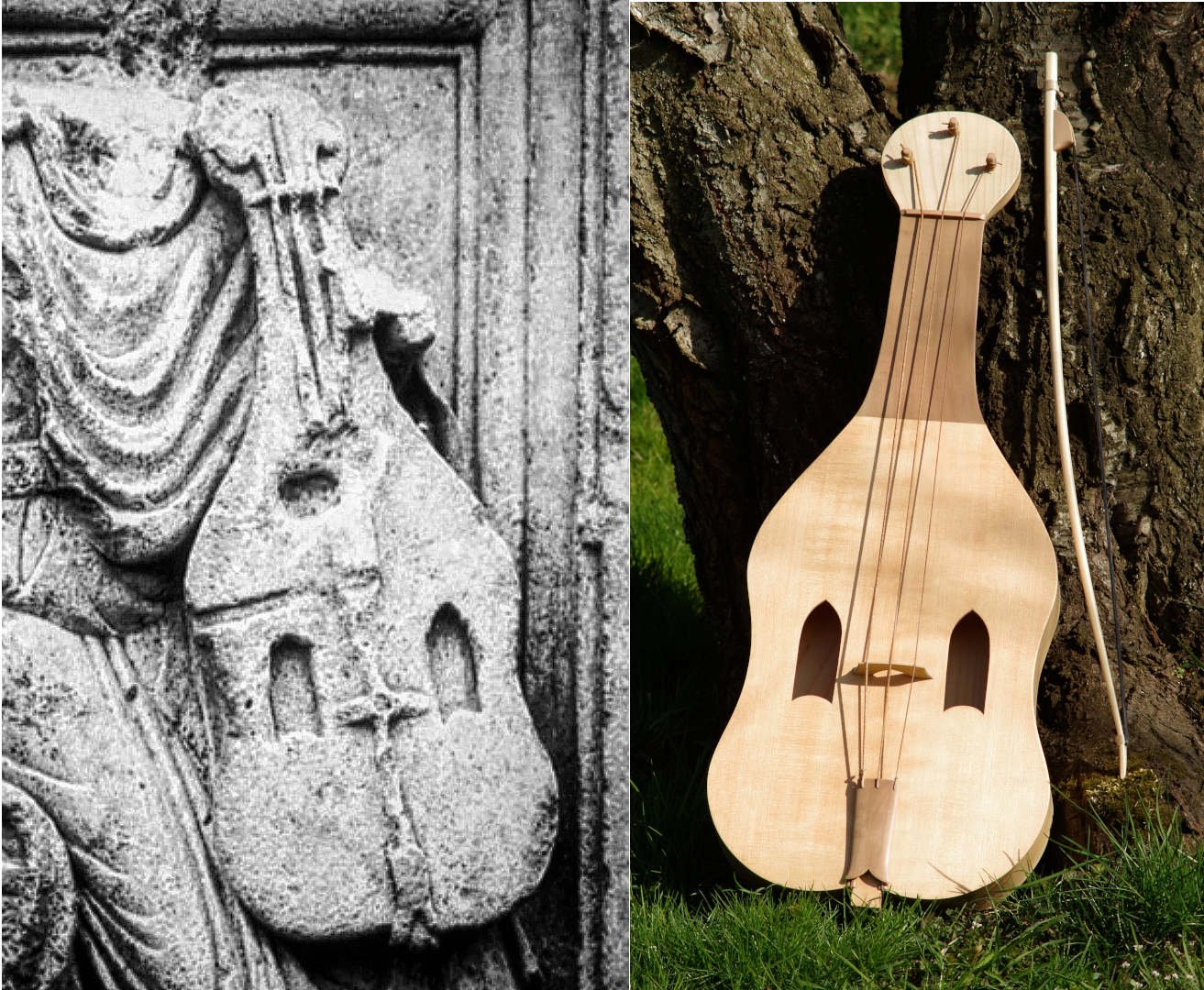
'Gîga', Cologne, circa 1200 CE.
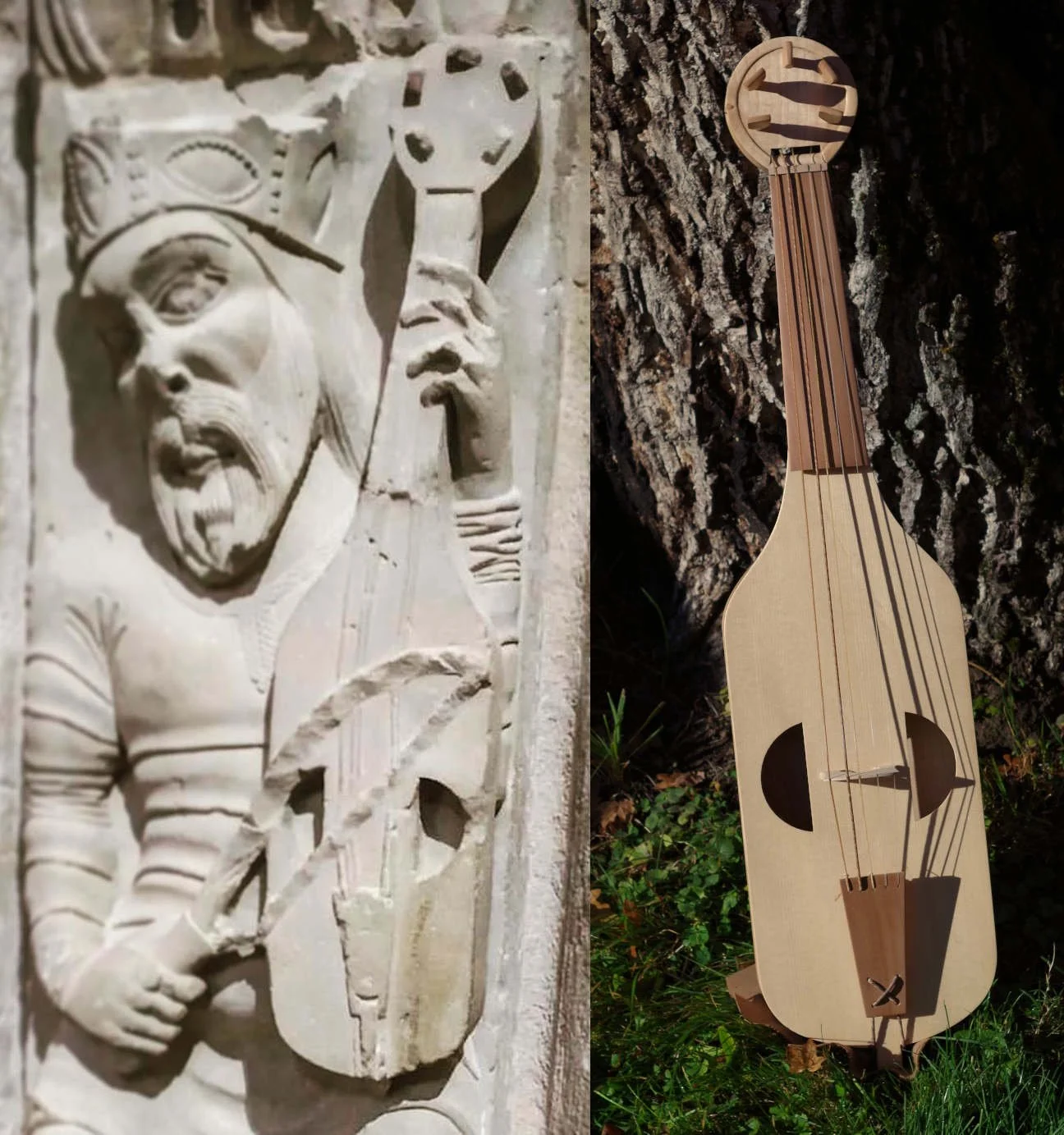
'Vielle', Santo Domingo de la Calzado, circa 1200 CE.
Blog by Michael Dollendorf