
Save the Date! Join the 15th Experimental Archaeology Conference in Iași (Romania), 12-15 May 2027
EXARC and the "Alexandru Ioan Cuza" University of Iași are pleased to invite you to the 15th Experimental Archaeology Conference (EAC 15), to be held in Iași, Romania, from 12–16 May 2027.
The conference is open to all and welcomes professionals, researchers, practitioners, and interested participants working in experimental archaeology, living history, museum practice, and related fields. Participation for audience and contributors is be possible both in person and online.
The event is organized locally by the Faculty of History and Arheoinvest, a research centre within the Institute of Interdisciplinary Research (ICI), through its specialized working group ExArIS (Experimental Archaeology at Iași). Together, they provide a modern environment for interdisciplinary research, connecting archaeology, archaeometry, and experimental practice.
Conference Theme
The 2027 edition of the Experimental Archaeology Conference will focus on a wide range of topics, including pyrotechnology, material culture production (lithics, ceramics, metallurgy, textiles), architectural (re)construction, taphonomy, use-wear analysis, and public outreach.
Call for Papers
Contributors, whether participating online or in person, are invited to submit their abstract directly through the conference registration form:
Please keep in mind the following deadlines:
31 October 2026: Deadline for abstract submissions (maximum length 200 words).
15 December 2026: Notification of acceptance.
28 February 2027: Deadline for Early Bird registration and submission of recorded presentations for online contributors.
31 March 2027: Publication of the conference final programme.
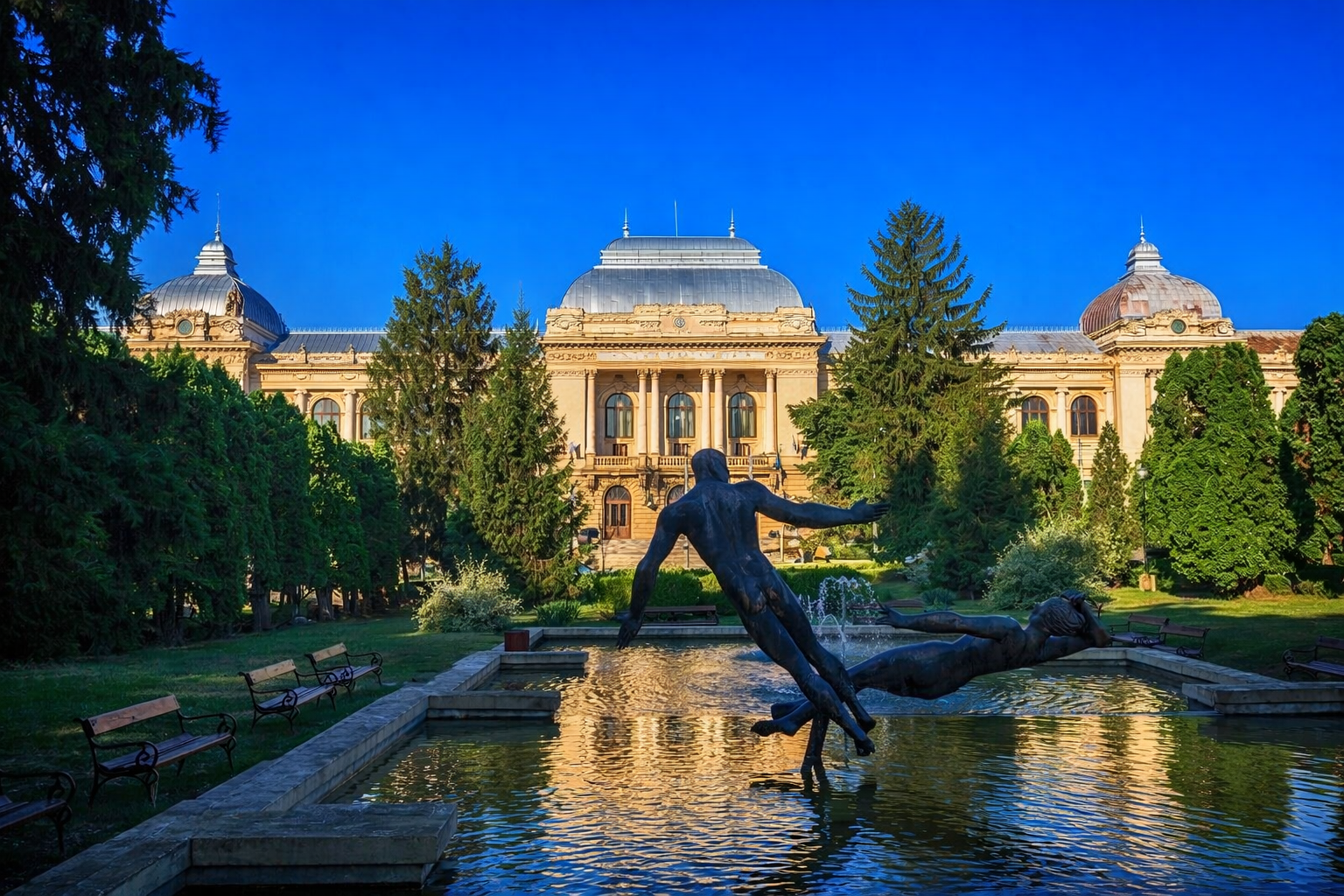
The main building of “Alexandru Ioan Cuza” University of Iași, Romania.
Programme Overview
We invite you to Iași, a vibrant university city with deep historical roots. The conference will be hosted by "Alexandru Ioan Cuza" University (UAIC), the oldest modern university in Romania (established in 1860). The conference runs 12–16 May 2027.
13 and 14 May will be fully devoted to discussions and presentations by researchers and contributors, while the last two days of the conference will be devoted to archaeological excursions. The full programme of speakers and presentations will be published on 31 March 2027.
Excursions
To conclude the conference, participants will be able to choose between two excursion options, both included in the registration fee.
Cucuteni–Băiceni archaeological excursion (15–16 May 2027)
This small-scale excursion is limited to 30 participants and places will be allocated on a first come, first served basis. The programme will include a visit to the Cucuteni site museum and the eponymous site at Cetățuia, followed by a hands-on experimental archaeology programme at the University research base in Cucuteni–Băiceni. Activities will include a shared outdoor lunch, workshops in bone- and antler-working and pottery forming, and an experimental pottery firing, followed by an overnight stay on site. Please note that this is an outdoor-oriented experience, with simple shared accommodation and facilities.
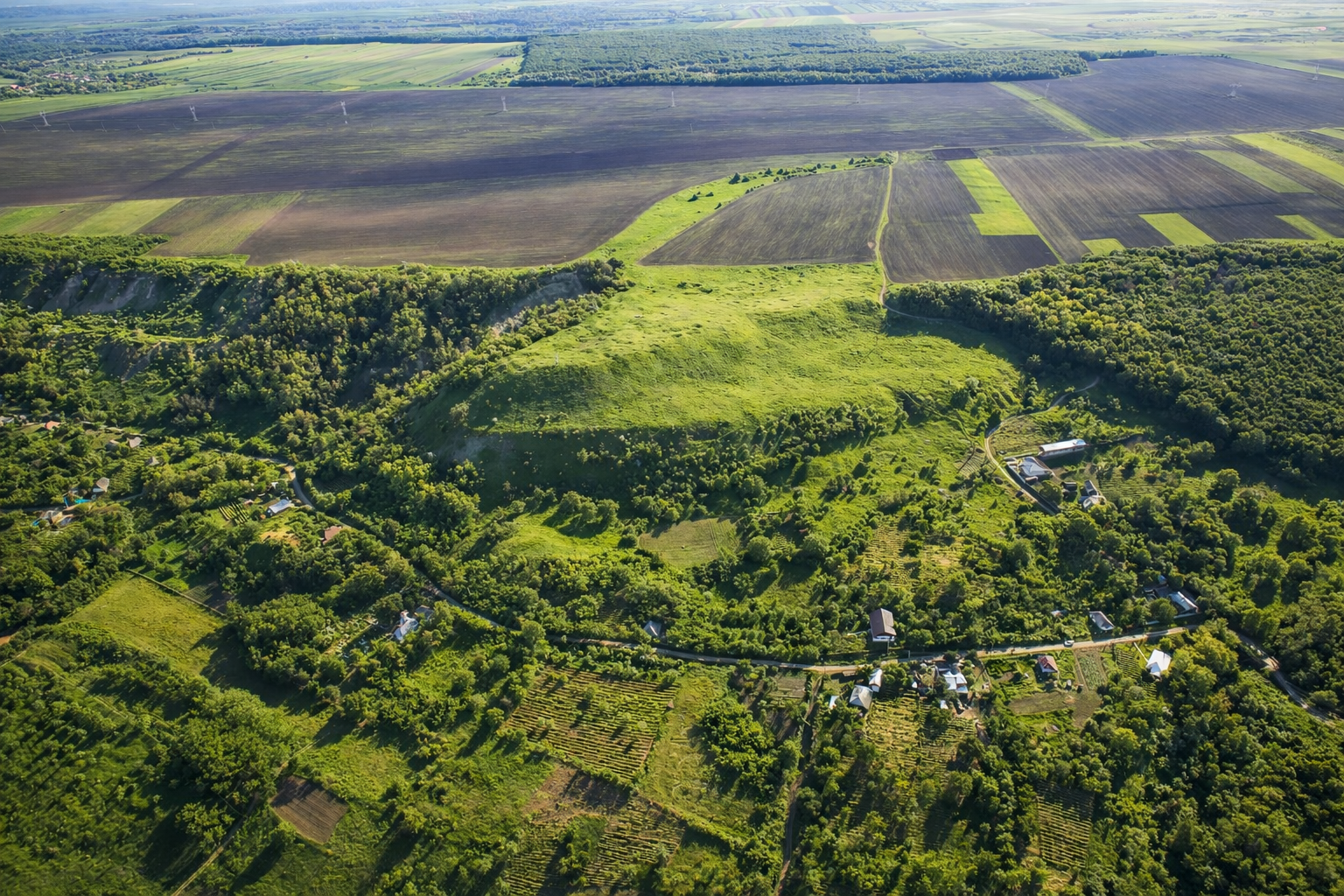
The Cucuteni archaeological site, at the heart of the Chalcolithic Cucuteni–Trypillia culture.
Guided cultural excursion in Iași (15 May 2027)
For participants who prefer to remain in Iași, we plan to offer a guided cultural excursion in the city, including visits to major museums such as the Palace of Culture and the Museum of Alexandru Ioan Cuza University.
Registration Fees
Registration is open for both in-person and online participation. Online attendees can join the conference free of charge, while for online presenters a fee of €30 will be charged. The fee is intended to cover administrative and organizational costs, including paper processing and YouTube streaming.
For in-person participants, the registration fees are structured according to membership status and category. Early Bird rates are available for all registrations completed by 28 February 2027 as follows (for further information on the three categories listed, see the conference registration form or the EXARC membership information page):

Please note that fees will increase for registrations made after 28 February 2027:
Regular Online Registration (from 1 March 2027): An additional €10 will be added to each category.
On-site Cash Payment: An additional €20 will be added to each category for those paying in person at the venue.
Travel and Accomodation
Venue
EAC15 will take place at Casa Universitarilor, Bulevardul Carol I 9, Iași, a UAIC venue in the Copou area, close to the university’s main building. The venue is also relatively close to Iași International Airport, at roughly 7.5 km distance.
By plane
The nearest airport is Iași International Airport (IAS). Direct flight connections to Iași include, among others: Bucharest (OTP, for connections), Vienna (VIE), London Luton (LTN), Brussels Charleroi (CRL), Paris Beauvais (BVA), Rome Fiumicino (FCO), Milan Bergamo (BGY), Milan Malpensa (MXP), Barcelona (BCN), Madrid (MAD), Dublin (DUB), Prague (PRG), Larnaca (LCA), Istanbul (IST), Eindhoven (EIN), Bologna (BLQ), Pisa (PSA), Valencia (VLC), Dortmund (DTM), Memmingen (FMM). Please note that route availability may vary depending on the airline, season and timetable changes; participants are advised to check current schedules before booking. Up-to-date information on arrivals, departures, destinations, passenger services, parking and airport access is available on the airport’s official website: https://www.aeroport-iasi.ro/
From the airport, the easiest public transport option is bus 50, which connects the airport with the main railway station (Gara Iași) and stops at key points in the city, including Piața Unirii and Târgu Cucu. According to the official public transport operator, buses run every 30 minutes. A standard urban ticket valid for 120 minutes currently costs 4.00 lei (€ 0.8).
By train
Iași is connected to the national rail network operated by CFR Călători. Participants arriving from elsewhere in Romania can use the official CFR journey planner to check timetables and buy tickets online, while the Iași station page provides current departures and arrivals: https://bilete.cfrcalatori.ro/en-GB/Itineraries
By car
Iași can be reached by road from all major regions of Romania, with the city connected to Bucharest and southern Romania via the E85/E583 route, and to other parts of Moldavia and north-eastern Romania through the national road network. As with any conference venue located in a central university area, it is advisable to check parking options in advance and to rely on live navigation for the final approach.
Getting around the city
Iași has an integrated public transport system of buses and trams operated by the city transport company. For visitors arriving by air, the airport connection through bus 50 usually makes Piața Unirii, the railway station area and the city centre the most practical transport hubs for accommodation choices. In addition, Bolt and Uber both operate in Iași, including airport pick-ups, and licensed taxis are widely available across the city, with most trips within the city being reasonably priced: https://www.sctpiasi.ro/en
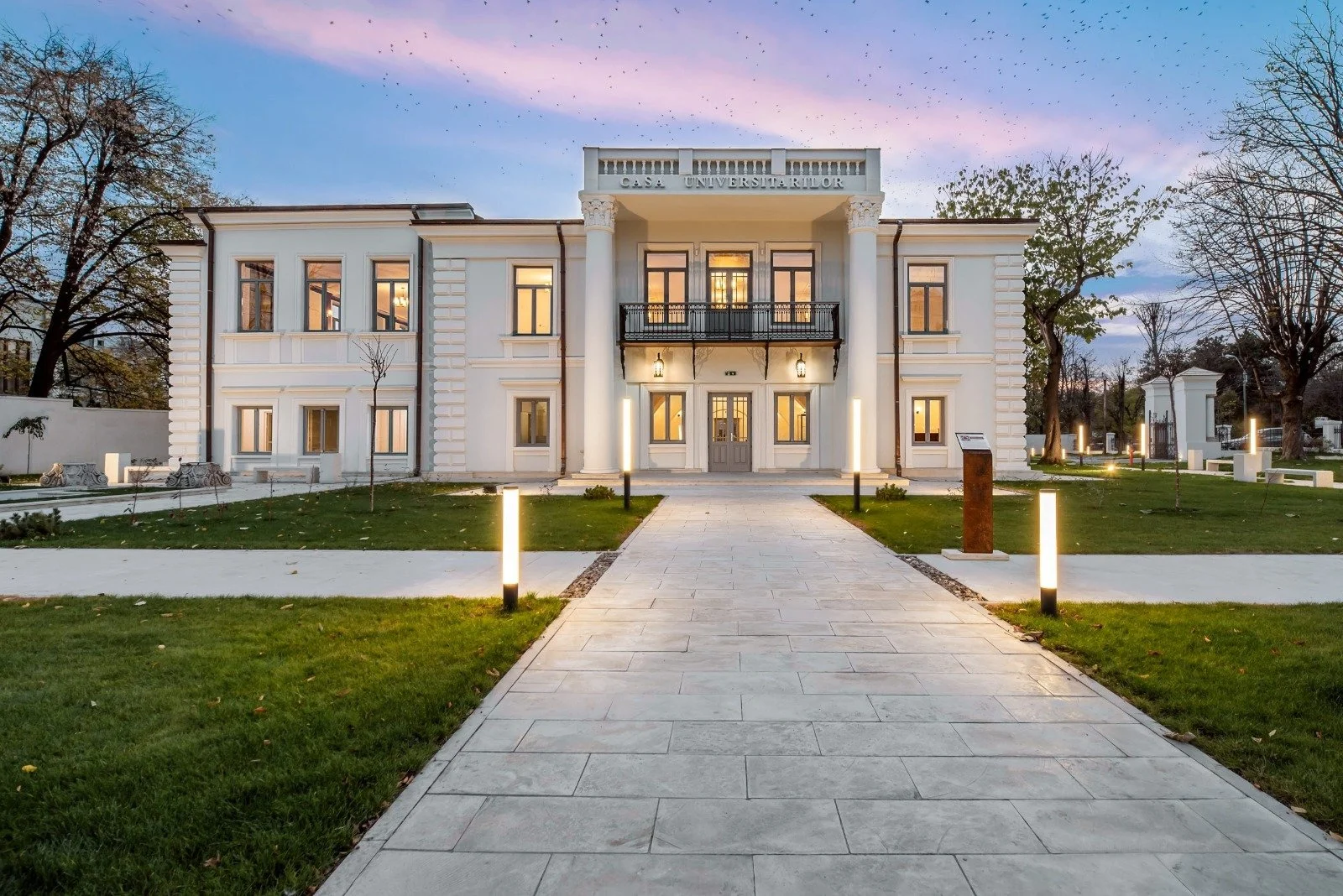
Casa Universitarilor, main venue of EAC 15.
Accommodation close to the venue
EAC15 will take place at Casa Universitarilor in the Copou area. For this reason, accommodation in Copou or in the city centre is generally the most convenient. As hotel prices in Iași can vary substantially depending on season, local events and booking platform, participants are strongly advised to book early.
Iassium Residence Copou
Location: Bd. Carol I nr. 3, Copou
Distance from the venue: approx. 0.3 km (4–5 minutes walking)
Indicative average price: 220 - 380 lei / 45 - 74€
One of the closest options to Casa Universitarilor, located on the same boulevard and particularly convenient for participants who want to stay in the immediate university area.
Prestige Hotel
Location: Strada Titu Maiorescu nr. 1
Distance from the venue: approx. 0.5 km (6–7 minutes walking)
Indicative average price: 330 lei / €65
A very well-placed option by Copou Park, suitable for participants who want a hotel-style stay within easy walking distance of the conference venue.
Casa Copou - cazare Iaşi Copou, pensiune Iaşi, cazare Copou Iaşi
Location: Șoseaua Sărărie 2
Distance from the venue: approx. 0.8 km (10–12 minutes walking)
Indicative average price: 220 lei / €44
A practical option on the edge of the Copou area, still comfortably walkable to the venue and useful for participants looking for a simpler, quieter stay.
Hostel Andrei
Location: Str. Lascăr Catargi nr. 42
Distance from the venue: approx. 1.0 km (12–14 minutes walking)
Indicative average price: 100 lei / €20
A useful lower-cost option in the broader Copou area, especially for students or participants looking for more budget-friendly accommodation within walking distance.
Hotel Ildis
Location: Strada Muntenimii nr. 7
Distance from the venue: approx. 1.2 km (14–15 minutes walking)
Indicative average price: 310 lei / 60€
A small hotel still within the distance range, suitable for participants who prefer a quieter location while remaining within walking distance of the venue.
Hotel Arnia
Location: Șoseaua Arcu nr. 26
Distance from the venue: approx. 1.3 km (about 15 minutes walking)
Indicative average price: 313 lei / €61
A solid hotel option near the Copou / central area interface, appropriate for participants who prefer a slightly more polished hotel setting while still staying within walking distance.
Budget-friendly options
Hotel Ceramica
Location: Bulevardul Tudor Vladimirescu nr. 103A
Distance from the venue: approx. 3.3 km
Indicative average price: 200 lei / €40
A practical lower-cost option in the Tudor Vladimirescu area, close to Iulius Mall and well connected to the city centre.
Hotel Eden
Location: Str. Sf. Sava nr. 1
Distance from the venue: approx. 2.1 km
Indicative average price: 300 lei / €58
A centrally located option in the historic core of Iași, suitable for participants who prefer to stay near the main monuments and restaurant area while keeping within a moderate budget.
Grey Boutique Hotel Palas
Location: Str. Zlataust (Fundac) nr. 3
Distance from the venue: approx. 2.7 km
Indicative average price: 360 lei / €70
A neat option near the Palas area, useful for participants who want a modern stay close to the centre at a still relatively accessible rate.
Hotel La Castel Iași
Location: Aleea Mihail Sadoveanu nr. 54
Distance from the venue: approx. 4.0 km
Indicative average price: 320 lei / €63
Located in the wider Copou area, this is a quieter option that still remains reasonably accessible to the conference venue by taxi or public transport.
Hotel Zimbru
Location: Bulevardul Chimiei nr. 2
Distance from the venue: approx. 3.6 km
Indicative average price: 355 lei / €70
A functional budget-conscious choice in the Tudor Vladimirescu / Iulius Mall area, convenient for visitors who do not mind being outside the immediate Copou zone.
Villa Grande
Location: Str. Călărași nr. 14
Distance from the venue: approx. 2.8 km
Indicative average price: 261 lei / €51
One of the more economical hotel-style options, suitable for participants looking for a lower nightly rate while remaining within easy reach of the centre.
About Iași
Located in north-eastern Romania, in the historical region of Moldavia, Iași is one of the country’s major cultural, academic and historical centres. Often described as the cultural capital of eastern Romania, the city combines a long political and intellectual history with a lively present shaped by universities, theatres, museums, festivals and a strong public cultural life. Set on the Bahlui River and traditionally associated with its “seven hills”, Iași offers visitors a distinctive blend of monumental architecture, green public spaces and an atmosphere that remains closely tied to scholarship and the arts.
Iași occupies a special place in Romanian history. First documented in 1408, it became the capital of the Principality of Moldavia in the sixteenth century and remained a major political and ecclesiastical centre for centuries. It later played an important role in the Union of the Romanian Principalities and, during the First World War, briefly served as the capital of Romania. This historical depth is still legible in the city’s fabric, where princely churches, monasteries, nineteenth-century palaces and university buildings stand alongside later civic architecture and modern cultural spaces.
For many visitors, one of the strongest reasons to explore Iași is its museum landscape. The city’s best-known landmark, the Palace of Culture, is not only an architectural symbol but also the headquarters of the National Museum Complex “Moldova” Iași, which brings together four national museums under one roof: the Museum of History of Moldova, the Museum of Science and Technology “Ștefan Procopiu”, the Museum of Art and the Ethnographic Museum of Moldova. The same museum complex also administers other important sites in the city, including the Union Museum and the “Mihail Kogălniceanu” Memorial Museum. This gives Iași a museum core that is unusually concentrated and particularly accessible for conference visitors.
The city is equally strong in literary and memorial museums. The National Museum of Romanian Literature Iași manages a wide network of museum houses and literary spaces, among them Vasile Pogor House – Casa Junimii, Ion Creangă’s Bojdeuca, the Mihai Eminescu Museum in Copou, and the Dosoftei House. Particularly noteworthy is Casa Muzeelor, on Strada Vasile Alecsandri, which brings together several distinct museums in one place: the Museum of Romanian Literature, the Museum of Poetry, the Museum of Jewish Theatre in Romania, the Museum of Childhood in Communism, and the Museum of the Iași Pogrom. Together, these institutions show not only the literary prestige of the city, but also its capacity to address memory, trauma and cultural diversity with seriousness and nuance.
For EAC15 participants, the Museum of “Alexandru Ioan Cuza” University deserves special mention. Located on Strada Titu Maiorescu 12, close to the historic university area, it is organised in two complementary sections, one archaeological and one academic, and brings together both the Museum of Cucuteni Civilisation and the Academic Museum. Its roots go back to the university’s earlier collections and to the institutional effort to preserve the memory of academic life in Iași; in its current form, the museum was reopened in 2010. For those interested in the history of research and teaching, it offers a particularly relevant bridge between the city’s archaeological heritage and its scholarly traditions. Iași also has a strong scientific museum tradition, represented, among others, by the Natural History Museum, founded in 1834, and by the university’s geological and palaeontological collections.
Beyond its museums, Iași remains a city shaped by education and public culture. It is home to Romania’s first university, founded in 1860, and continues to be one of the country’s most important university centres. This academic tradition is complemented by the Vasile Alecsandri National Theatre, the Opera, the Philharmonic, the Botanical Garden and the many churches and monasteries that define the city’s skyline and historical identity. In spring especially, Copou Park, the Botanical Garden and the wider university district give the city a calm and elegant rhythm that many visitors find immediately appealing.
For conference participants, Iași offers more than a venue: it offers a setting in which history, heritage, scholarship and urban life remain visibly intertwined. Compact enough to be explored with ease, yet rich enough to reward longer visits, the city provides an excellent environment both for academic exchange and for discovering one of Romania’s most distinctive cultural capitals.
For additional information on transport, accommodation, landmarks and local activities, participants may also use the Iasi Official App, managed by Iași City Hall and available via the official tourism portal: https://www.turism-iasi.ro/en/home-en/
Why Attend?
Scientific Networking & Collaboration: EAC15 is dedicated to exploring the full scope of experimental research. We invite scholars and practitioners from around the globe to share and discuss their work, ranging from controlled scientific experiments to a vast array of ancient crafts, living history, and educational activities.
Cultural Heritage: Explore the Moldavian region, a core area of the Chalcolithic Cucuteni-Trypillia culture, characterized by its distinctive polychrome pottery and extensive settlements. This landscape offers a rich archaeological context, reflecting a continuous evolution from prehistory to the medieval Principality of Moldavia. Iași, a historical capital of Romania, connects this legacy with its medieval to modern past and current academic tradition.
Local Experience: Beyond the academic sessions, enjoy the scenic landscape of Iași, traditionally known as the city of the Seven Hills. The region preserves authentic ethnographic traditions and rural craftsmanship, complemented by the renowned Moldavian hospitality, local wines, and cuisine.