
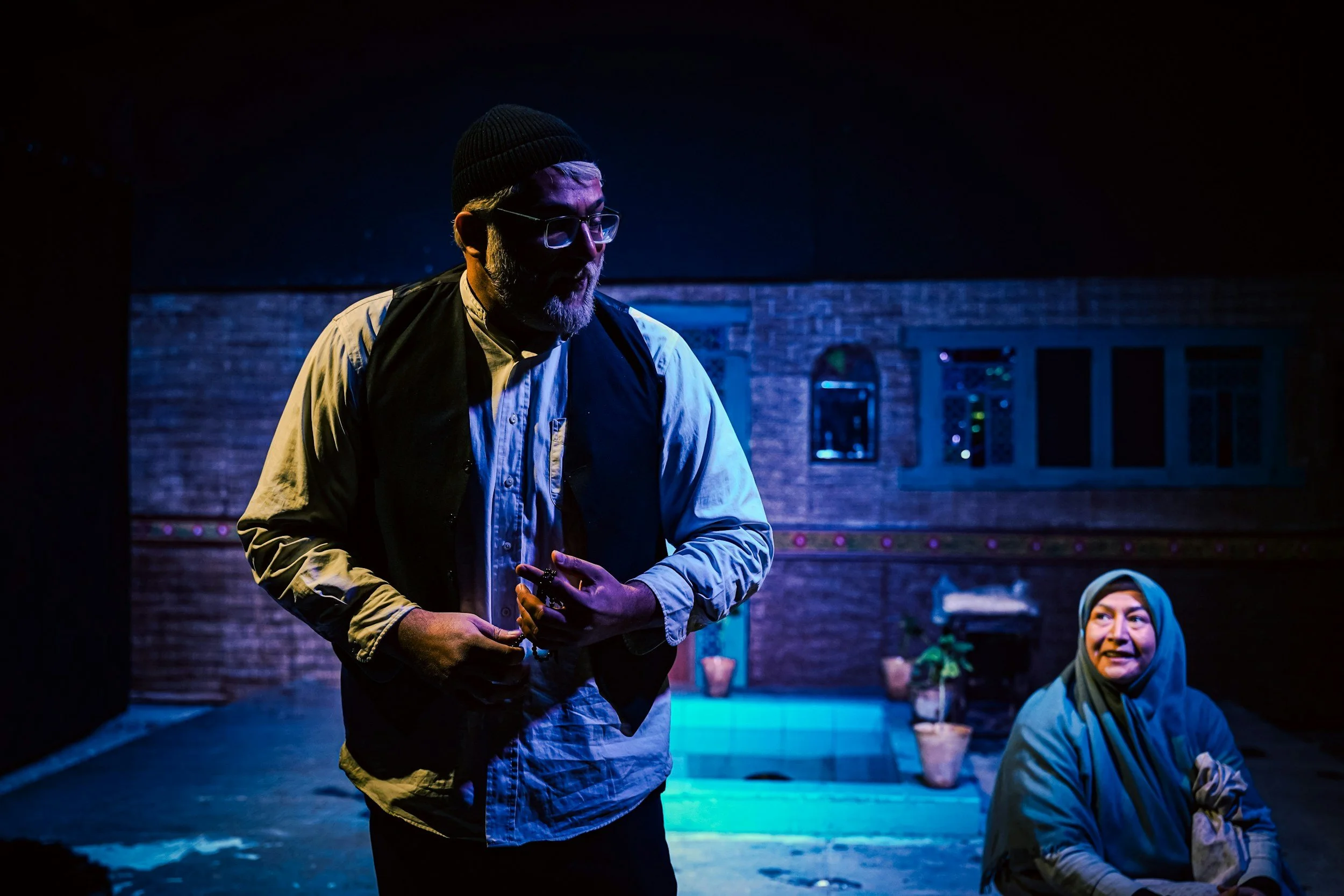
LIVE INTERPRETATION
The mission of the International Museum Theatre Alliance is to inspire and support the use of theatre and theatrical technique to cultivate emotional connections, provoke action, and add public value to the museum experience.
JOIN OUR WORKING GROUPS
-
JOIN OUR WORKING GROUPS -
What is the difference between live interpretation and museum theatre?
They are more similar than different! Both can be performance, script or scenario-based or completely spontaneous and improvised. The term “theatre” tends to be used by trained actors working in this field, often in dedicated performance spaces within museums and galleries (ie.. non-historic contexts). The term “live interpretation” tends to be used by those who come from a history or museology background and often takes place in historic contexts (eg. open air museums, historic houses).
It is the quality and appropriateness of theatre or live interpretation (rather than any slight difference in approach) which counts. The aim of both is to communicate facts, concepts, and/or an historical period as effectively and memorably as possible.
Is it the same as Living History?
Living history is often unstructured in terms of narrative, and focussed on past life skills such as crafts or ways of working. Living history tends to describe a context (recreated street, open air museum) as much as any activity (like theatre or live interpretation) which may happen there.
Is it the same as Re-enactment?
In re-enactment the emphasis tends to be on visual impact at a distance. Live interpretation is more reliant on dialogue between interpreters or between interpreter and audience (see key definitions). Re-enactors are often hobbyists, who take part in larger scale re-enactments of battles or other costumed events as a leisure activity rather than as a profession. If you are interested in joining a working group focusing on re-enactment, check out our Re-enactment Working Group.
Interpretation
A communication process designed to reveal to a specific audience the significance of a historic / cultural / natural site or museum and the audience’s relationship with it in a first-hand experience that involves interaction with another person, place, object or artefact. Live interpretation and museum theatre are two, highly effective, forms of interpretative technique.
Museum Theatre
A specific kind of interpretation that employs fictional activity to communicate ideas, facts and concepts. A museum-theatre performer assumes the role of a character (as a solo gallery character, an interpreter or as part of a play or scenario) in order to entertain and educate visitors. They take on the role of a particular character in a particular circumstance in order to help visitors appreciate and understand the story at hand and, through this, some aspect of the host museum or site.
Third Person Interpretation
Where an interpreter dresses in appropriate costume and has full knowledge of the life of a particular character or specific era, but does not assume that role (i.e. can speak authoritatively of the character’s life and times, but remains a 21st century person discussing the past).
Role Play
Where the audience as well as the interpreter takes on a role or roles within a particular scenario or performance which supports the plot, which may or may not involve advance preparation and the wearing of appropriate costume.
Live Interpretation
A broad term used to cover any live interaction between museum or site staff and visitors. This includes many living history-type activities, ranging from non-costumed demonstrations of historical craft to storytelling and costumed first- and third-person interpretation, The term is also used to cover activities such as guided tours, education workshops, theatre performances and demonstrations.
First Person Interpretation
Where an interpreter assumes a particular role, often (but not always) in appropriate costume, under the premise that the character has moved forward through time to the audience's present, or that the audience has travelled back to the past and joined the characterin its assumed time.
Living History
A very broad term used to describe historically authentic activities in an appropriate context, often an open air museum. Interpreters engaged in living history may be in character (see First Person) or simply in costume (see Third Person).
Re-enactment
A detailed recreation (often by a large number of people) of a single short-term historical event (such as a battle, designed to attract a large number of spectators), where action, costume and combat often take precedence over the spoken word.
Storytelling
Where the interpreter focuses on relating a particular story rather than on wearing an authentic costume or playing a particular character.
The mission of the International Museum Theatre Alliance is to inspire and support the use of theatre and theatrical technique to cultivate emotional connections, provoke action, and add public value to the museum experience.
A Resource for Museums and Heritage Institutions who...
want to make your museum or your interpretation more visible
want to reach new audiences in a shifting demographic environment
have a visiting re-enactment group who need to communicate your learning outcomes?
enable your museum staff to communicate in a more lively and professional manner
provide museum education that will engage and enthuse the visitor - exceeding expectations, and creating a "fanbase"
want to create a special atmosphere on special occasions
A Resource for Museum Educators, Re-Enactors, Performers & Storytellers who...
wish to become a museum performer
are keen to network with museum and heritage professionals
wish to learn new methods, or are keen to share your performative tool with colleagues
are passionate about first,- second- and third person interpretation, or wish find out about it
wish to reach a larger audience and be part of a network for professional growth and exchange
are already offering good work but wish to reach more visibility
We can provide your staff, volunteers or crafts demonstrators with the tools to bring history alive and increase your visitor numbers. We can devise teaching modules for museum theatre or live interpretation that are tailored to your needs. We provide a link between popular notions of history and your scientifically curated exhbitions, taking the visitor on an emtional journey from "Hollywood" to your learning objectives in a fun way. We can lend your museum artefacts a voice, creating empathy with material and immaterial heritage.
IMTAL-Europe welcomes those who work with interpretive performance in digital audio-visual media and contemporary art forms. Membership of IMTAL-Europe is open to all who are interested in this field, whether site hosts, suppliers, scholars, students or practitioners.
The International Museum Theatre Alliance has, since 1990, promoted theatre and live performance as interpretive techniques in cultural institutions. IMTAL-Europe, IMTAL-Americas and IMTAL-Asia Pacific are affiliated membership organisations that foster and develop diverse forms of live interpretation in museums, galleries, science centres and historic sites all over the world.
Anyone wishing to know what has been written on the subjects of historical interpretation, museum theatre, storytelling, experimental archaeology, reenactment and chautauqua is faced with a challenge. Not so much the challenge of the scarcity of bibliographical references, but rather that of the difficulty of gaining access to a reliable database containing a broad selection of bibliographical references grouped by affinities. The bibliographic database “Interpretation” seeks to fill this gap.
What is a Bibliographic Database?
Information about printed and electronic books and articles in periodicals can generally be found in a bibliographic database which is a repository of bibliographic or publication records. It provides an index of books and articles and generally includes title, author, abstracts, reviews and may also include links to full-text content. A database can be searched (queried) through search interfaces that facilitate construction of queries, or directly by using specialized languages.
Purpose of a Living History Database
As a project of the Catholic University of Linz library team, the purpose of the co-operative and multilingual database “Interpretation” is to improve the accessibility of publications about all aspects of living history. “Interpretation” contains reliable and comprehensive references from the entire world to contemporary trends in living history found in books, journals, so-called “Festschriften” (publications on jubilees), periodicals, and other media and is a unique resource, freely available to all. Therefore, as a service to the interpreter community it helps collecting, accessing, sharing and disseminating data in the field of living history and can be a central starting point for anyone looking for information on the subject.
It is based on the literature which the Catholic University of Linz acquires within the scope of its special collection in living history. All types of publications, both peer-reviewed and grey literature, are included. It covers titles representing international, regional, country-by-country as well as thematic perspectives. Within this special collection are, among other things, more than 4,000 records from over 35 multilingual journals and periodicals. The majority of the journals are in English or German. A smaller number is in French, Dutch and Italian. More than 1,500 articles have a link to full text, and more than 3,000 articles have an abstract. If the full text of a citation is available on the internet, you will see an embedded link accompanied by the word “Full Text”. However, most publishers restrict access to the full text of their material by IP address, that is the unique number each PC gets on the internet. So often you might find that you cannot access an article, especially in a home situation. In this case you will either have to go to a (university) library that has the materials you need or go to the inter-library loan department of any library. Most “Interpretation” records can be ordered by your local library on interlibrary loan for you. You may also send us an order via email.
The database is regularly updated by the university’s “Interpretation” team to take into account new books and articles produced throughout the world on the subject of living history.
This Database is a Free-of-Charge Service of the University Library of the Catholic University of Linz.
Disclaimer:
The Catholic University of Linz is not responsible for the content of external Internet sites. Links with them do not necessarily represent recognition by the Catholic University of Linz of any entities to which these sites refer.
Editors:
Ingo R. Glückler
Bethlehemstraße 20
A-4020 Linz
Phone: +43 70 7842934120
Cellular: +43 676 87764120
Skype: ktu-bibliothek
Fax: +43 70 7842934155
Email: i.glueckler [at] ku-linz.at
Andreas Sturm
Passstrasse 113
D-52070 Aachen
Phone: +49 241 151052
Email: andreas.sturm [at] livehistory.de
How Can You Contribute?
"Interpretation - The International Bibliographic Database of Living History" is a new database and thus currently far from comprehensive. The most difficult part of making the database more comprehensive is learning about, and obtaining, publications. You can help us to make the database more complete by reporting your publications. Send us ISBNs, DOIs, URNs or citations that should be added to the database. Please help us to improve by reporting publications that are not yet in the database and by suggesting changes to our website. What could we add or change that would make the database more useful to you? When reporting a publication that has an ISBN, DOI or URL, all you need to do is email us the ISBN, DOI or URL. When reporting a publication that is not available online but is of a type that can be easily obtained through purchase or interlibrary loan (journal paper, book, thesis, etc.), please email a citation (please also send a PDF file, photocopy or the actual publication if you can easily do so). When reporting a publication that is not available online and is less easy to obtain (so-called grey literature), please send the actual publication by mail. If you or your organization has produced a publication as a PDF file and would like us to put the file open access on our scientific repository KiDokS (whether or not it is also available on your server), please email us the file along with a clear statement that you give us a non-exclusive right of use unrestricted in space and time and that you want us to make it available digitally.